
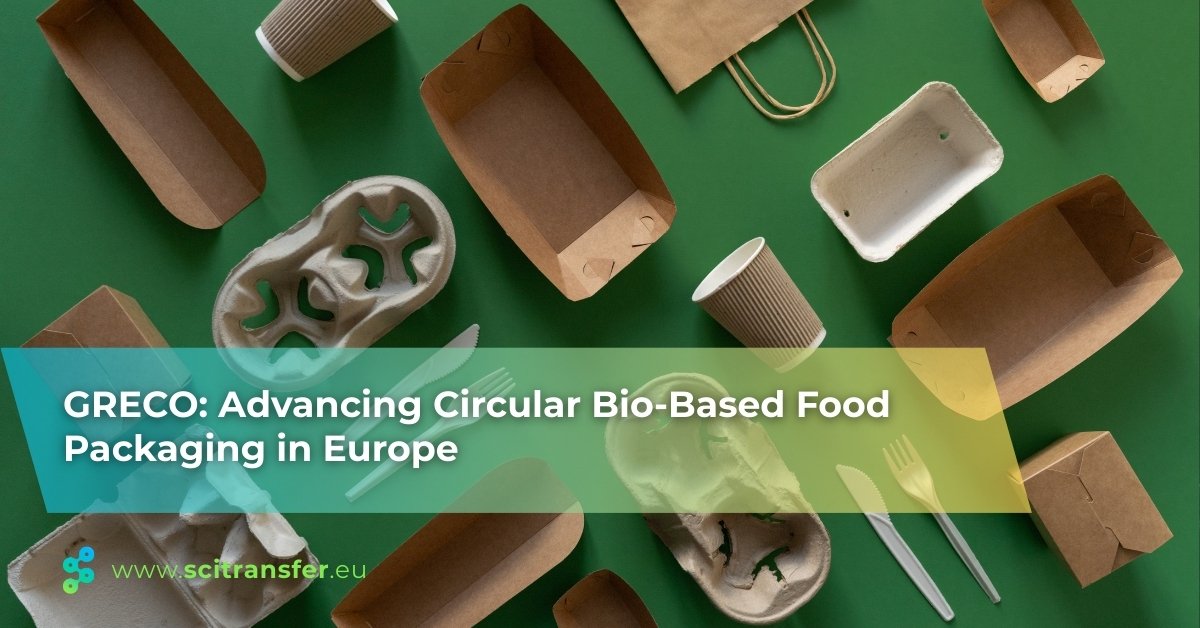
Every year, millions of tonnes of plastic packaging keep our food fresh – and then remain in nature for decades. The dilemma seems simple: either safety and convenience, or sustainability. But the European project GRECO argues that this dilemma can be overcome.
GRECO – Innovative bio-based biodeGradable Recyclable safE and cirCular foOd packaging – is developing a new generation of bio-based, biodegradable and recyclable food packaging. The aim is not simply to replace one plastic with another, but to create an entirely new value chain that is safe, compliant with regulations and truly applicable in industry.
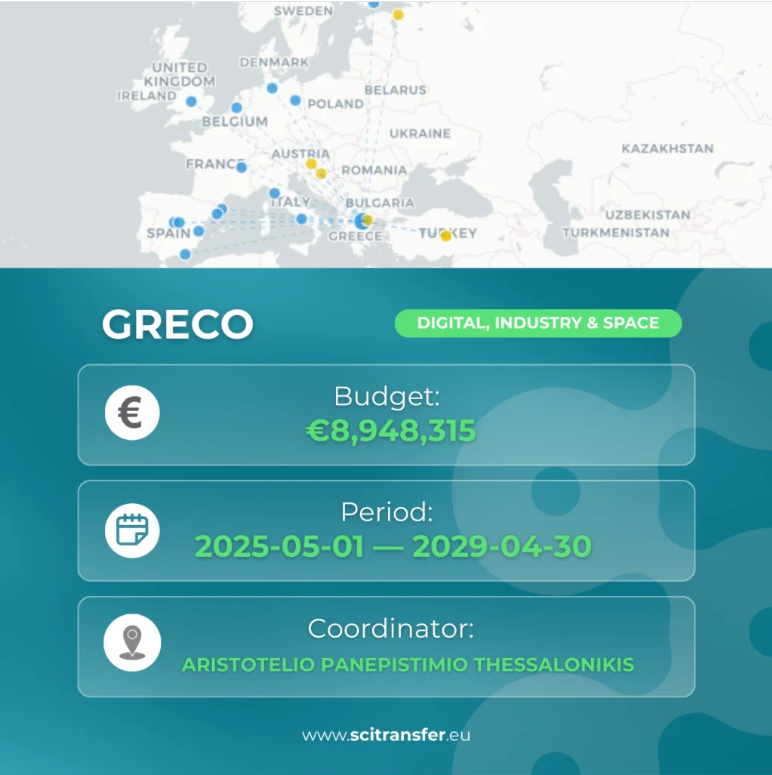
The project started on 1 May 2025 and will run until 30 April 2029, with a budget of €7,662,137.01. This represents a substantial investment in the future of the European packaging industry – and in consumers’ trust in “green” solutions.
Societal Relevance and Environmental Impact
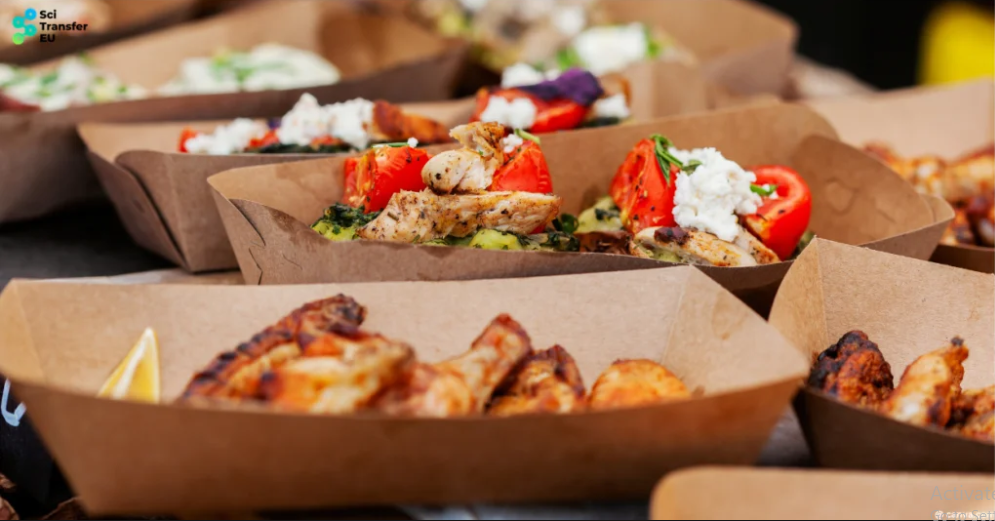
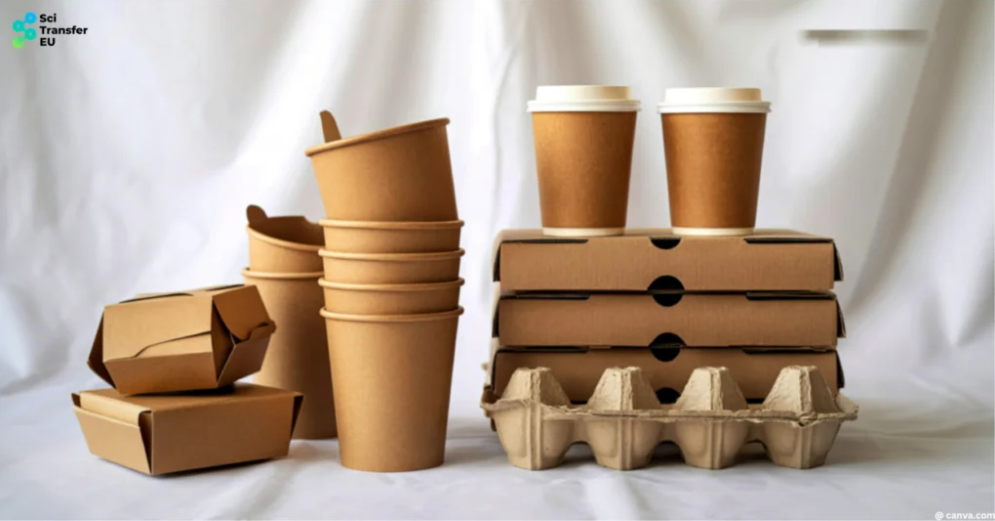
The most direct impact of the project concerns everyday life. Food packaging is everywhere – in the supermarket, in restaurants, in home kitchens. It must be safe, protect food from spoilage and contamination, yet not become long-term waste.
GRECO is developing new materials based on PLA (polylactic acid) – a bio-based polymer that can be both biodegradable and recyclable. The project is creating new copolymers, coatings, additives and catalysts, as well as surface treatments that enhance the material’s performance.
Importantly, these materials are designed according to the Safe and Sustainable by Design (SSbD) strategy – meaning that safety and sustainability are embedded from the very beginning of the product’s design, rather than added afterwards.
The packaging solutions developed within GRECO are intended to break down in various environments: industrial composting, home composting, anaerobic environments, marine environments and soil.

This means the project does not consider sustainability only in laboratory conditions, but in real-world environments where packaging may end up after use.
For society, this translates into less long-lasting waste, reduced pressure on ecosystems, and clearer standards and labelling rules. GRECO not only develops materials but also contributes to new or modified standards and to proper labelling, helping consumers better understand what “compostable” or “biodegradable” actually means.
Scientific and Technological Contributions
The scientific contribution of GRECO goes beyond the development of a new material. The project operates simultaneously at several levels.
First, it demonstrates the life cycle and techno-economic feasibility of new bioplastics value chains. This is crucial: many sustainable solutions appear promising in the laboratory but prove economically unviable in industrial practice. GRECO places scientific development within the real context of the market.
Second, the project uses digital tools for simulation and modelling to support developments already at the design stage. This accelerates material optimisation and reduces the risk of unsuccessful industrial trials.
Third, the project integrates social sciences and humanities (SSH) to examine public perception and acceptance of the new materials. This is an important scientific dimension: sustainable technologies often fail not because of physico-chemical limitations, but due to a lack of trust or understanding among citizens.
GRECO approaches packaging as a systemic challenge – a combination of chemistry, regulation, economics, standards and human behaviour. This interdisciplinary approach is, in itself, a significant scientific contribution.
Consortium and European Collaboration
GRECO is coordinated in Greece and brings together a broad European network of partners – from scientific institutions to industrial companies and standardisation organisations.
This combination of universities, research centres, industrial manufacturers and standardisation bodies demonstrates that the project is conceived not as an academic experiment, but as a bridge between the laboratory and the market.
The EU contribution amounts to €7,662,137.01, while the total project cost is €8,948,315.
This funding supports:
- research and development,
- life-cycle demonstration,
- techno-economic analysis,
- regulatory compliance,
- contributions to standardisation and labelling,
- social research on innovation acceptance.
In the context of the European Plastics Strategy, the Single-Use Plastics Directive (SUP) and the Circular Economy Action Plan (CEAP), a project such as GRECO is not an isolated experiment, but part of a broader transformation of the industry.
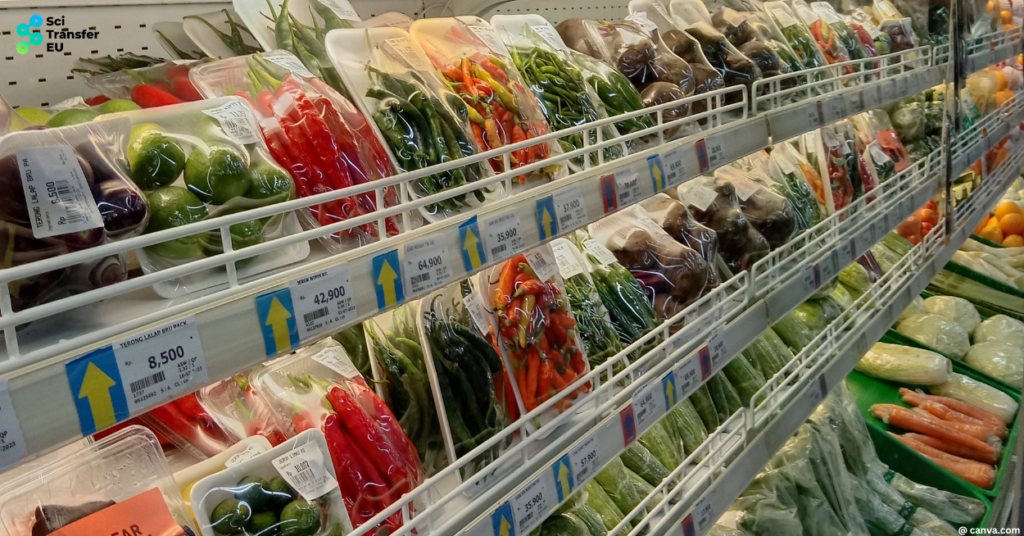
From the Laboratory to the Supermarket Shelf
One of GRECO’s strongest aspects is that it does not promise an abstract “green” alternative, but actively works towards the real market introduction of new materials in the packaging sector.
By demonstrating regulatory compliance, proposing new standards, and analysing social perception, the project prepares the ground for industrial uptake.
If successful, the outcome will not simply be a new type of plastic, but a new design logic: packaging conceived from the outset as part of a circular system.
Outlook and Long-Term Significance
GRECO is an example of how a European project can simultaneously serve science, industry and society.
For society – safer and more sustainable solutions in everyday life.
For science – an interdisciplinary model for developing and validating new materials.
For industry – a pathway towards competitive, circular products.
And all this with a clear budget, a defined timeframe and a broad European coalition.
If our food can be protected without the planet paying a hidden price, projects like this are the ones that point the way forward.
Autor: Radoslav Todorov
Sources
- https://www.greco-euproject.eu/
- https://cordis.europa.eu/project/id/101177661
- https://map.scitransfer.eu/project/greco-101177661
Map SciTransfer EU (https://map.scitransfer.eu/project/greco-101177661)