
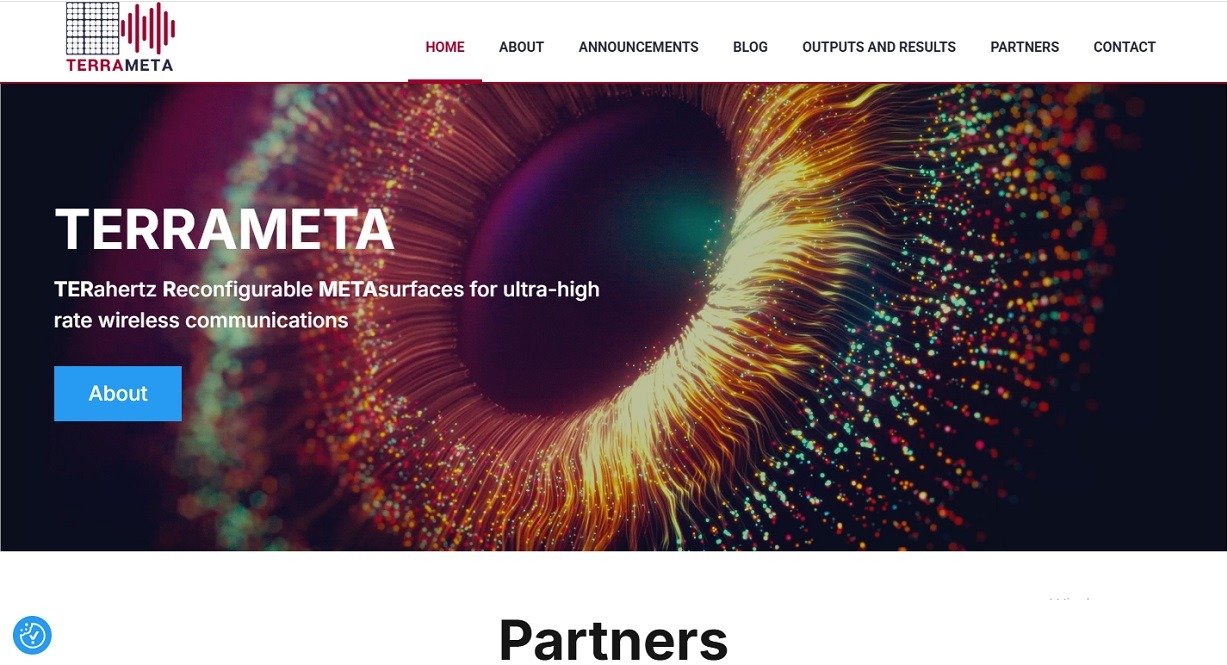
Across Europe, a quiet transformation is underway—one that is set to redefine how societies communicate, work, and interact with digital environments. At the centre of this shift is TERRAMETA (TERahertz ReconfigurAble METAsurfaces for ultra-high rate wireless communications), a Horizon Europe-funded project exploring the next frontier of connectivity: terahertz (THz) communication.
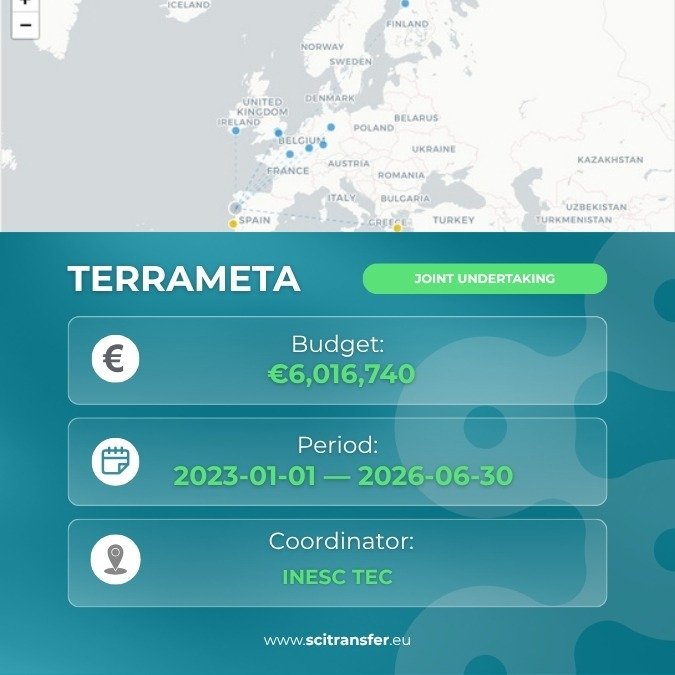
With a total budget of €6 million and a consortium of 13 partners, TERRAMETA goes beyond incremental advances in 5G. It aims to establish key technological building blocks for 6G networks, expected to emerge around 2030.
Why Terahertz Communication Matters
Despite ongoing advances, existing wireless technologies face growing constraints in terms of spectrum availability, energy efficiency, and achievable data rates. The rapid growth of connected devices, data-intensive applications, and real-time services demands a step change in performance.
Terahertz frequencies—located between the microwave and infrared ranges of the electromagnetic spectrum—offer a promising solution. By operating at these frequencies, future networks could unlock ultra-high data rates and enable entirely new applications. These include real-time holographic communication, “Internet of Senses” experiences that blend physical and digital perception, and large-scale digital twins of cities, industries, or even biological systems.
In addition, terahertz communication could support fully autonomous transport systems and enable highly precise indoor positioning, particularly relevant for smart manufacturing and logistics environments. Together, these use cases illustrate the technological direction of 6G.
Reconfigurable Intelligent Surfaces: A New Paradigm
What distinguishes TERRAMETA is not only its use of terahertz frequencies, but its approach to controlling how signals propagate.
At the core of the project are reconfigurable intelligent surfaces (RIS)—engineered materials capable of dynamically shaping electromagnetic waves. Rather than treating the physical environment as passive, TERRAMETA introduces the concept of environments that actively participate in communication processes.
Surfaces such as walls or ceilings can effectively become programmable elements that guide signals with high precision. This enables improved coverage, reduced energy consumption, and significantly enhanced data transmission performance.
To achieve this, TERRAMETA is developing an integrated technological framework that combines high-performance THz transmitters and receivers with reconfigurable metasurfaces and advanced network optimisation methods. These elements are designed as part of a unified system, ensuring that innovations are not developed in isolation but validated in realistic, end-to-end scenarios.
From Laboratory to Real-World Deployment
A defining characteristic of TERRAMETA is its emphasis on validation in real-world environments.
The project moves beyond theoretical modelling by demonstrating its technologies in practical settings, including industrial indoor environments such as factories and smart buildings, as well as outdoor telecommunications test fields. Particular attention is given to hybrid scenarios that combine indoor and outdoor conditions, where connectivity challenges are especially complex.
By deploying solutions in operational environments, TERRAMETA aims to demonstrate both technical feasibility and readiness for industrial adoption. This practical focus is essential for bridging the gap between research and deployment, ensuring that promising innovations can transition effectively into real-world applications.

A Strong Pan-European Consortium
TERRAMETA is coordinated by INESC TEC in Porto, Portugal, and brings together a diverse consortium of academic institutions, research organisations, and industry partners from across Europe.
The partnership includes leading universities such as the University of Oulu in Finland, the National and Kapodistrian University of Athens in Greece, the University of Hertfordshire in the United Kingdom, and the Université du Luxembourg. Industrial partners, including British Telecommunications (BT), Intracom Telecom, and ACST GmbH, contribute essential expertise to ensure alignment with market needs and future deployment pathways.
Funded under the HORIZON-JU-RIA framework, the project reflects the importance of coordinated public–private collaboration in advancing strategic research and innovation priorities in Europe.
Strategic Impact and European Relevance
With an EU contribution of €5.88 million over a period of 42 months (January 2023 – June 2026), TERRAMETA represents a focused investment in Europe’s digital future.
Its significance lies in addressing a critical challenge: making terahertz communication both practical and scalable. By doing so, the project contributes to strengthening Europe’s position in the global development of 6G technologies.
Expected outcomes include the development of new hardware solutions for THz communication, integrated network architectures that bridge physical and digital layers, and validated use cases that can inform future standards and industrial deployment. In this way, TERRAMETA supports broader European objectives related to digital transformation, innovation capacity, and technological sovereignty.

Dissemination and Stakeholder Engagement
In addition to its technical work, TERRAMETA places strong emphasis on communication and dissemination. The project actively shares its progress, results, and insights through dedicated online channels, making complex technological developments accessible to a wider audience.
Stakeholders interested in following the project or exploring its outputs can access further information via the official website, LinkedIn page, and its CORDIS profile.
These efforts support transparency, foster engagement, and contribute to the broader uptake of project results within the European research and innovation ecosystem.
Building the Foundations of 6G
Wireless communication may be invisible, but its impact is deeply embedded in modern society. TERRAMETA contributes to making this invisible infrastructure more intelligent, efficient, and adaptable.
By combining advances in physics, materials science, and network engineering—and by validating these innovations in real-world environments—the project moves beyond conceptual research toward tangible impact.
As Europe advances toward the 6G era, TERRAMETA highlights a fundamental shift: future communication systems will not rely solely on devices, but on environments that actively shape and optimise connectivity.
Autor: Radoslav Todorov
Images: canva.com, scitransfer.eu, terrameta-project.eu
Sources: