
Across Europe, emergency response systems have been largely shaped by the need to manage chemical, biological, radiological and nuclear (CBRN) risks. Yet one critical category remains under-addressed: biotoxins.
Produced by organisms such as bacteria, fungi, and algae, biotoxins present complex and often poorly understood threats. The EU-funded EMBRACE project is working to close this gap—combining scientific innovation, operational coordination, and cross-border standardisation to strengthen Europe’s resilience.
A Strategic Horizon Europe Initiative
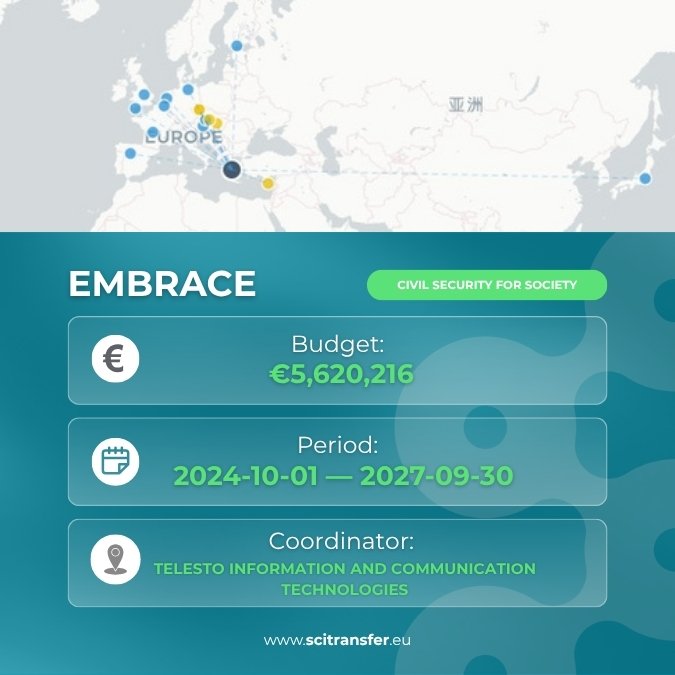
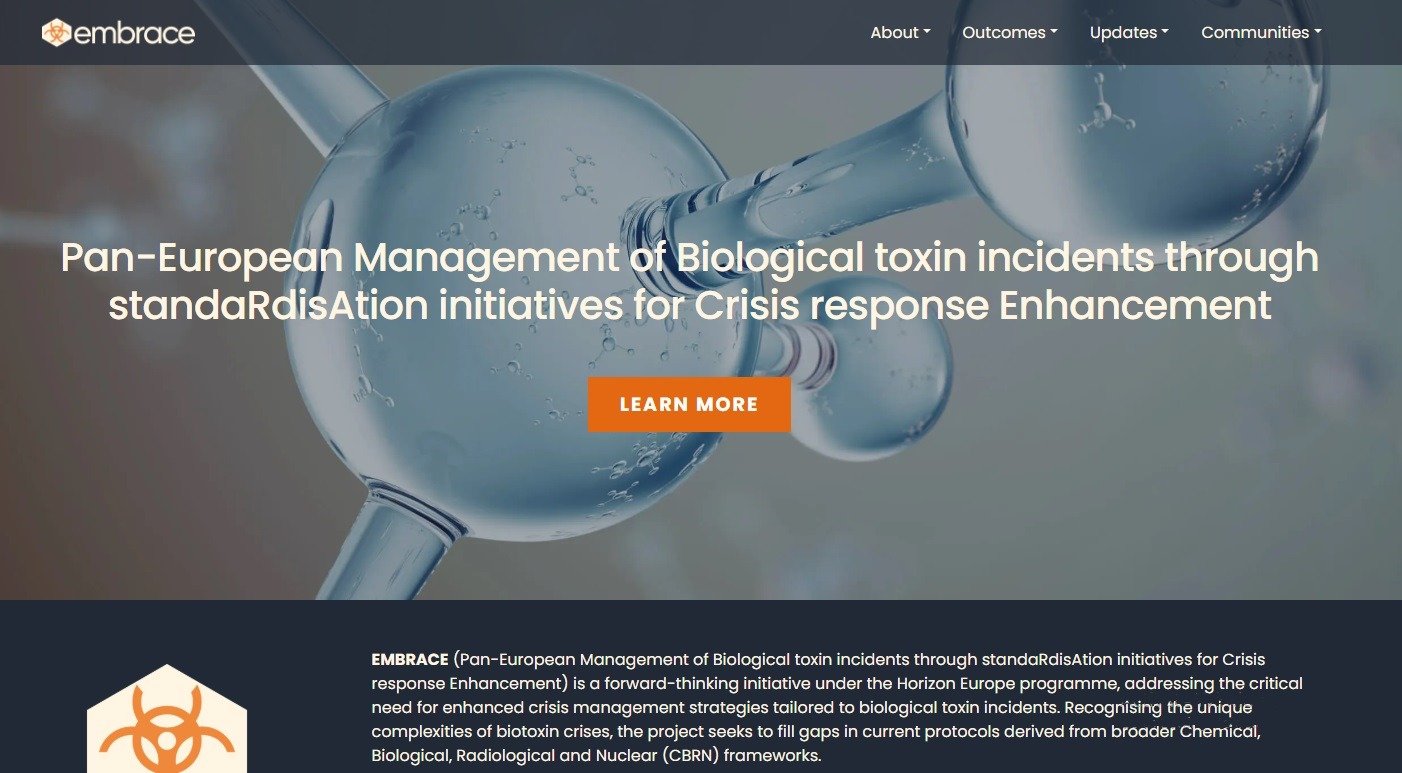
Launched in October 2024 and running until September 2027, EMBRACE (pan-European Management of Biological toxin incidents through standaRdisAtion initiatives for Crisis response Enhancement) is a Research and Innovation Action under Horizon Europe.
With a total budget of €5.62 million, fully funded by the European Commission, the project is strategically positioned within the EU’s civil security framework. Coordinated by Telesto Technologies (Athens, Greece) and involving 18 partners, EMBRACE ranks among the top-performing projects in its field, placing in the top 17% of security-related proposals based on evaluation results.
Understanding a Complex and Overlooked Threat
Biotoxins occupy a grey area in emergency preparedness. Unlike conventional chemical hazards or infectious biological agents, they combine elements of both while introducing distinct challenges.
They can be difficult to detect, may require specialised decontamination approaches, and often produce delayed or ambiguous symptoms. As a result, existing emergency protocols—largely derived from CBRN frameworks and the Union Civil Protection Mechanism—are not fully adapted to biotoxin-related incidents.
This gap can limit the ability of first responders to act quickly and effectively.
EMBRACE addresses this challenge by consolidating scientific and clinical knowledge and translating it into practical tools tailored to real-world emergency scenarios.

Driving Innovation for Operational Use
At its core, EMBRACE is developing a portfolio of technologies and solutions designed for frontline application. These include:
- Portable biosensors for rapid, on-site detection of biotoxins
- Novel decontaminants specifically designed for toxin neutralisation
- Field-deployable diagnostic devices for immediate analysis
- Biomarker-based tests to identify human exposure through in vitro methods
- Decision-support software for risk assessment and response coordination
These innovations are developed as part of an integrated system, ensuring they are not only scientifically robust but also operationally practical.
Importantly, the project also expands the knowledge base by addressing biotoxins that have received limited attention in emergency response contexts, contributing to a more comprehensive understanding of emerging threats.
Enabling Cross-Border Interoperability
Effective crisis response in Europe requires seamless cooperation across national borders. Differences in procedures, equipment, and communication protocols can significantly hinder joint operations.
EMBRACE places strong emphasis on standardisation to address this challenge. The project is developing harmonised protocols, shared methodologies, and compatible technologies to ensure interoperability among EU Member States.
This alignment enhances both efficiency and safety—critical factors when dealing with hazardous substances where inconsistencies can have serious consequences.
Building a Lasting European Knowledge Network
Beyond technology development, EMBRACE is investing in long-term capacity building.
A key initiative is the creation of a pan-European Biotoxin Task Force, bringing together scientists, clinicians, emergency responders, and policymakers. This network will serve as a sustained source of expertise and guidance beyond the project’s lifetime.
In parallel, the project is developing a biotoxin reference and stakeholder hub—a platform designed to facilitate knowledge exchange, provide access to distributed expertise, and support ongoing collaboration across sectors.
From Research to Deployment
A defining feature of EMBRACE is its strong focus on real-world application. The project goes beyond knowledge generation by actively translating research into deployable tools and operational protocols.
This is supported by a clear emphasis on valorisation and commercialisation, ensuring that solutions are scalable, accessible, and aligned with the needs of emergency services.
At the same time, EMBRACE collaborates with related EU initiatives, reinforcing synergies and avoiding duplication—thereby strengthening Europe’s overall crisis management capacity.
A Targeted Investment in European Security
With an EU contribution of €5.62 million, EMBRACE represents a focused investment in societal resilience. Its impact lies not in scale, but in precision—addressing a clearly identified and underexplored risk with high relevance for public safety.
The project’s strong evaluation performance and above-average funding per partner reflect confidence in both its approach and its expected outcomes.
Looking Ahead
As Europe faces an increasingly complex risk landscape, preparedness must evolve beyond established threat categories. Biotoxins may not yet dominate public attention, but their potential impact—whether arising from natural events or deliberate misuse—requires proactive action.
By integrating scientific research, technological innovation, and cross-border coordination, EMBRACE is laying the foundation for a more resilient Europe.
Its long-term value will extend beyond the tools it develops, shaping how knowledge is shared, how responders collaborate, and how emerging threats are addressed across the European Union.

Autor: Radoslav Todorov
Images: canva.com, scitransfer.eu, embracebiotoxhub.eu
Sources: