
Digital Visibility as a Scientific Resource
In recent years, scientific communication has undergone a significant transformation. Whereas traditionally the dissemination of scientific results was carried out mainly through academic journals, conferences, and specialised networks, today social media plays an increasingly central role in this process. They not only accelerate the exchange of information, but also significantly expand the range of audiences — including policymakers, industry partners, journalists, and the general public.
This change is also reflected at the institutional level. Within programmes such as Horizon Europe, communication and dissemination are no longer secondary activities, but mandatory components with clearly defined objectives and measurable impact indicators. Research teams are expected not only to generate new knowledge, but also to demonstrate how this knowledge reaches society and contributes to real change. In this context, social media becomes a key tool for achieving the so-called “societal impact.”
The growing importance of these channels, however, also leads to strategic dilemmas. One of the most common is how to achieve greater organic reach. Data consistently shows that personal profiles on platforms such as LinkedIn generate significantly higher engagement compared to organisational pages. This creates a temptation for research teams to “adapt” their communication model by creating profiles that formally appear individual, but in reality represent a project or institution.
At first glance, this approach appears logical and even effective. In reality, however, it is based on a misunderstanding both of how social platforms function and of the mechanisms of trust in scientific communication. Instead of increasing visibility, such a strategy often leads to exactly the opposite result — limited reach, platform sanctions, and erosion of trust among the audience.
Defining the Problem: When the Project Presents Itself as a Person
One of the most common practices in the digital communication of scientific projects is the creation of a profile that formally appears personal, but in reality functions as a channel for an organisation or consortium. This may be a profile with a name resembling a real person (for example “Dr. Project Hydrogen”), or one that combines a personal name with a project identity. Regardless of the specific form, what these cases have in common is that the profile does not represent a clearly identifiable individual, but a collective entity.
This practice arises as a pragmatic solution to a real problem. Research teams are under pressure to communicate actively, but often lack the time, experience, or motivation for all participants to maintain their own profiles. Creating “one central account,” managed by a coordinator or communication expert, appears to be an effective compromise. An additional incentive is the fact that personal profiles receive greater organic reach, which creates the impression that this model will combine convenience and effectiveness.
The problem, however, is not only a violation of platform rules, but a deeper structural mismatch. Social networks are built around the concept of individual identity — a profile is not merely a technical container for content, but a representation of a person with a professional history, a network of contacts, and a behavioural pattern. When an account is used by multiple people or for institutional purposes, it inevitably begins to demonstrate hybrid behaviour that does not correspond to expectations of a “real” user.
This mismatch has several dimensions. First is the question of authorship. In scientific communication, authorship carries responsibility and expertise. When a publication comes from an unclear source, the audience has no way of assessing who stands behind the claims, what their qualifications are, and whether the information can be trusted.
Second is the issue of consistency of voice. A profile managed by different people often demonstrates varying style, tone, and level of expertise, which further undermines the sense of authenticity.
From a technological perspective, this model is also problematic. Social platform algorithms are optimised to recognise and promote human behaviour — dialogue, reaction, and individual opinion. A profile that functions as a one-way channel for official announcements deviates from this model and is therefore classified as less relevant.
Ultimately, the “project as a person” is not merely a stylistic choice, but a strategic mistake that affects trust, visibility, and the sustainability of communication at the same time. This turns it into a key problem that requires a conscious and informed solution, rather than improvised adaptation to platform constraints.

Platform Policies and Algorithmic Reality
Social media platforms actively invest in systems for detecting inauthentic behaviour. These systems use machine learning to analyse patterns such as posting frequency, content type, social connections, and interactions.
A profile that publishes exclusively institutional content, lacks typical personal interactions, and functions as a one-way communication channel is quickly classified as suspicious. The consequences may include limited reach, temporary blocking, or complete removal.
Data from industry reports shows that millions of fake accounts are removed annually, a significant portion of them detected at the moment of registration. This means that a strategy based on such profiles is inherently unstable and short-term.
Trust as Currency in Scientific Communication
The scientific ecosystem operates on clear identification and traceability. Researchers are linked to institutions, publications, and digital identifiers such as ORCID. This transparency enables verification, reproducibility, and the accumulation of trust.
When communication is conducted through a profile without a clear personal identity, it loses precisely this key element. For the academic community, this is a signal of potential risk, and for external audiences — a barrier to engagement.
Research on online behaviour shows that users are significantly more likely to interact with content when they can associate it with a specific person. In the context of science, this means that personal authority remains central, even in a digital environment.
One of the classic theoretical frameworks here is the so-called source credibility theory, according to which the perception of information depends to a large extent on how much the source is considered expert and trustworthy. In a digital environment, this evaluation is made almost instantly — through name, photo, institution, and previous activity. When these signals are missing or unclear, the likelihood of trust and engagement decreases significantly.
Research specifically in the context of social media confirms this effect. For example, a study by Edelman Trust Barometer (2023) shows that “people like me” and recognisable experts are among the most trusted sources of information, significantly ahead of abstract institutions or brands. This is particularly relevant for science, where the complexity of content requires an intermediary — a person who can interpret it.
In the field of digital marketing, there is also quantitative data on audience behaviour. Analyses by LinkedIn and Refine Labs show that content published from personal profiles generates multiple times higher engagement (including comments and shares) compared to the same content published from corporate pages. The reason is not only algorithmic; it is related to how users perceive communication — as a conversation between people, rather than a one-way message.
Additional research on so-called parasocial interaction shows that even limited exposure to a personal profile can create a sense of familiarity and connection. This increases the likelihood that the user will react, share, or trust the content. In the scientific context, this means that an active researcher who communicates regularly gradually builds “digital authority,” which cannot be replicated by an anonymous or collective profile.
There is also specific data from research on scientific communication. Analyses published in Journal of Science Communication and PLOS ONE show that publications presented with clear authorship (name of scientist, institution, person) receive higher levels of sharing and better understanding from the audience. The reason is that readers use the author as a cognitive “anchor” — a reference point that helps them evaluate complex information.
All these results lead to a consistent conclusion: in a digital environment, trust is not built abstractly, but personally. Even when it comes to institutional or collective activity, the audience seeks a face — a person who embodies the knowledge, takes responsibility for it, and makes it understandable.
In this sense, for scientific projects this is not merely a question of communication style, but of effectiveness. A profile that does not offer a clear human identity loses precisely this engagement mechanism — and with it a significant part of its potential impact.
Algorithms and the “Penalty” for Inauthenticity
Platforms such as LinkedIn clearly prioritise content generated by real people. Data unequivocally shows that posts from personal profiles achieve significantly higher engagement and reach compared to organisational pages.
Attempts to “simulate” a personal profile, however, lead to the opposite effect. Algorithms not only recognise this pattern, but also treat it as less relevant. Thus, instead of benefiting from the advantages of personal profiles, projects lose visibility.
This creates a paradox: a tool that could increase impact actually reduces it when used incorrectly.
This behaviour of algorithms can be understood if we examine how they actually optimise social platforms. Their primary goal is not simply the distribution of content, but the maintenance of meaningful interaction between real users. Therefore, the models that govern visibility (feed ranking algorithms) are trained to recognise signals of “human” behaviour and to distinguish them from template-like, one-directional, or instrumental publishing patterns.
Through these mechanisms, the algorithm is not “misled” by the form of the profile, but evaluates its behaviour. If this behaviour does not correspond to expectations of a real person, the content gradually loses reach. Thus, the attempt to use the advantages of a personal profile without actual human presence leads to exactly the opposite effect — lower, not higher visibility.
What Works: The Hybrid Communication Model
Practice in successful scientific projects shows that the most effective approach is a combination of institutional and personal presence.
The official project page plays the role of a central hub — a place for structured information, results, and formal identity. It is particularly important in the context of accountability to funding bodies.
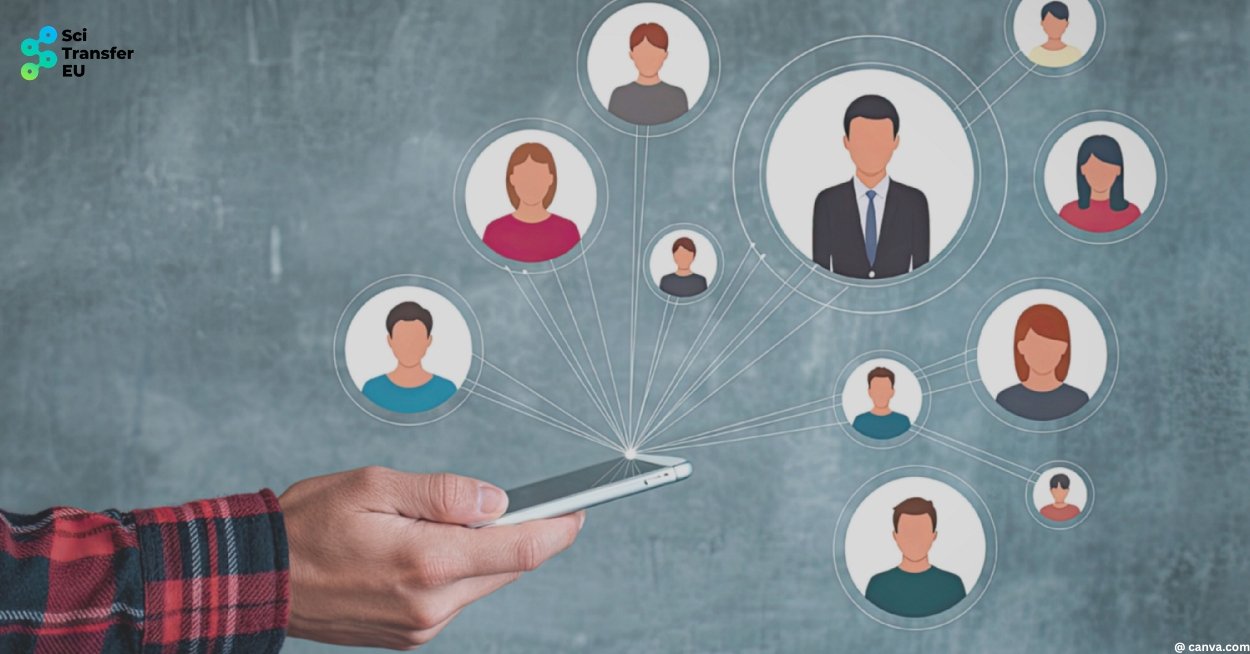
The real dynamics, however, come from the personal profiles of researchers. When scientists share content in their own voice, add context, and express opinion, posts become more engaging and more visible.
So the correct model is: Project page + personal profiles of the team. Instead of a fake profile, the correct architecture looks like this:
Project/organisational PAGE (not a personal profile) — a central hub for official news, results, reports Each team member shares from their PERSONAL profile — with a short personal comment, context, or opinion. Mutual tagging and cross-referencing — this is how the algorithm recognises organic interaction
This is exactly the model that large-scale European projects (Horizon, ERC) successfully apply — and that is why building personal profiles of key scientists is a critical task within the communication Work Package.
This model creates a network effect: each post reaches a different audience, and through tagging and interaction an organic ecosystem forms around the project.
Practical Guidelines for More Effective Scientific Communication and Outreach
Regardless of whether you are on LinkedIn, X, Bluesky, or Facebook — the following tactics work equally well for scientists on all of them.
Stop writing “I’m happy to share…”
This is perhaps the most common mistake scientists make on LinkedIn. Every post that begins with “I’m happy to share our new paper” is a lost post. The algorithm and the readers want value from the very first sentence.
Instead, open with a provocation, a question, or a surprising finding, such as:
“We found that 73% of microplastics in urban water come from an unexpected source — your clothes.”
Use the structure “Scientific result → Why it matters to you”
Scientists tend by habit to write as if for their colleagues. But on social media, the audience is mixed.
Every post should have a two-level structure: what we discovered and why it matters for the ordinary person, for business, or for policy. This is precisely what “scientific communication” is — not populism, but translating science into understandable language.
LinkedIn — publish 2–3 times per week, vary formats
The optimal strategy for a scientist on LinkedIn should include approximately:
25% educational content — you explain a concept from your field
20% industry insights — you comment on trends in science
25% community building — collaborations, partnerships, invitations for discussion
15% mission and impact — how your research helps society
15% behind the scenes — the life of the scientist, conferences, laboratory moments
X / Twitter — the thread format is your weapon
Among the active scientific community on platform X, the thread format is the most effective for scientists — you start with a provocative statement, then unfold the arguments step by step in 8–12 tweets. Tagging relevant organisations and researchers increases reach by up to 80%.
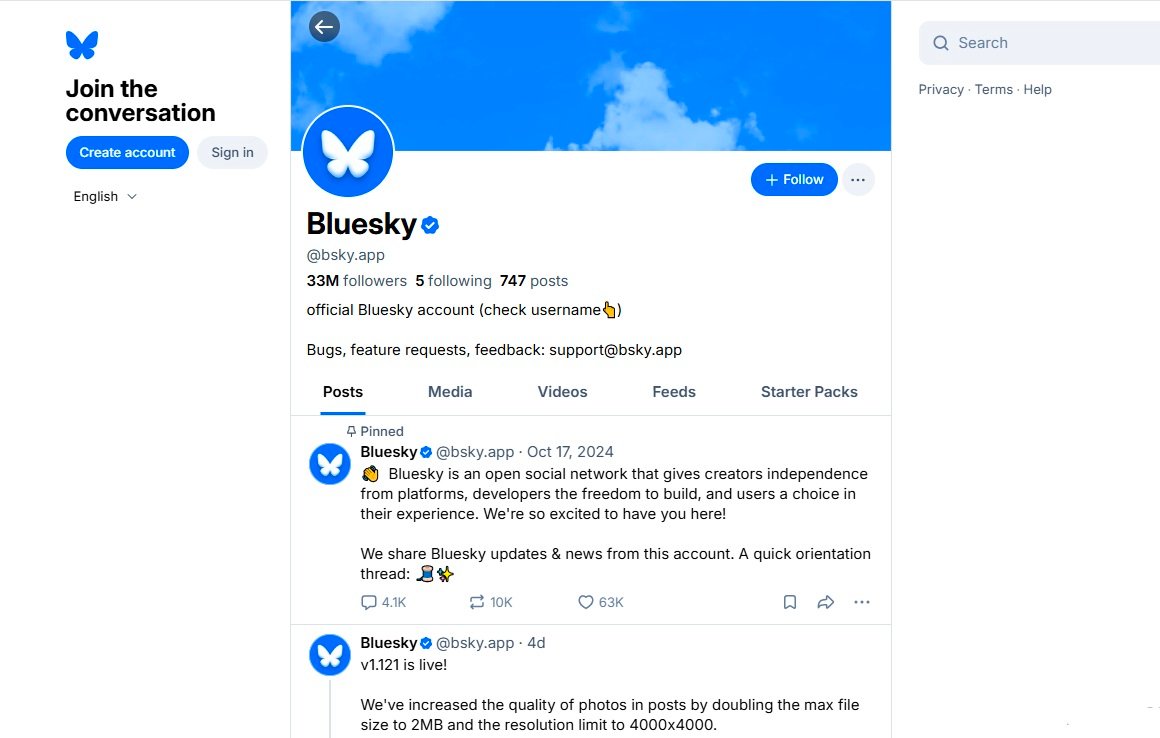
Bluesky — build presence there as well
Bluesky already has over 40 million users and is growing rapidly among the academic community. The platform Altmetric officially tracks scientific citations from Bluesky — which means that your activity there directly affects the measurable impact of your publications. More than 22% of researchers already use Bluesky as a primary platform. It is preferred due to better control over visible content and lower levels of misinformation.
Facebook — visual content dominates
On Facebook, posts with only visual content (video, infographics, images without long text) generate on average 37,000 interactions compared to under 1,000 for text posts. Scientists who share results through infographics or short videos achieve significantly greater reach. Posts related to science funding are among the most engaging — a particularly relevant topic in the context of European funding.
One paper = 7 pieces of content
Do not publish a scientific result only once. One research study can be transformed into:
– A LinkedIn post with the key finding
– A thread on X with the methodology
– An infographic for Facebook/Instagram
– A short video (Reels) up to 60 seconds for LinkedIn/YouTube
– A podcast episode or audio clip
– A popular article for a broad audience
– A newsletter for policymakers and funding bodies
Do not spam-tag — tag strategically
Tagging people in posts increases reach by 80%, but only if it is relevant. Tag: co-authors, key partners, the funding organisation (EC, ERC), conference organisers. Never tag people with whom you have no real connection — the algorithm recognises spam behaviour and reduces reach.
LinkedIn Newsletter — a long-term asset
LinkedIn Newsletter is a feature that allows researchers to build a subscriber base directly within the platform. For scientists with European projects, this is an ideal channel for regular updates to stakeholders: policymakers, business partners, media. The newsletter is sent automatically to all subscribers — without algorithmic filtering.
Significance for Research Teams and Projects
For scientific projects, especially those with public funding, effective communication is an integral part of success. The loss of a channel or the use of an ineffective strategy can have direct consequences for accountability and perception of the project.
Building a communication strategy based on real profiles and authentic content not only reduces risks, but also increases the long-term value of scientific work.
Fake personal profiles offer a short-term illusion of greater reach, but in reality create long-term risks — technological, reputational, and strategic.
Data and practice clearly show that sustainable scientific communication is based on authenticity, transparency, and active participation of the researchers themselves.
In the digital environment, where algorithms and audiences seek human presence, the personal voice of the scientist remains the strongest and most irreplaceable tool for impact.
Main Sources Used:
Zanetti, M. (2024). Avoid the pitfall of Fictitious Personal Accounts when managing your Company’s Facebook Page
https://www.linkedin.com/pulse/avoid-pitfall-fictitious-personal-accounts-when-managing-zanetti/
LigoSocial (2025). LinkedIn Company Page vs Personal Profile: Which Drives More Sales in 2025
https://ligosocial.com/blog/linkedin-company-page-vs-personal-profile-which-drives-more-sales-in-2025
LinkedIn Transparency Report (latest available data)
https://about.linkedin.com/transparency
Meta Transparency Center (Fake Accounts Reporting)
https://transparency.fb.com
Digital Science / Altmetric
https://www.altmetric.com
Pew Research Center (Social Media Engagement Data)
https://www.pewresearch.org
European Commission. Horizon Europe Communication and Dissemination Guidelines
https://ec.europa.eu
Refine Labs (B2B Social Media Engagement Data)
https://refinelabs.com
Security Journal (University of Portsmouth research on fake profiles)
https://www.springer.com/journal/41284
Images: canva.com, bsky.app
Author: Radoslav Todorov