
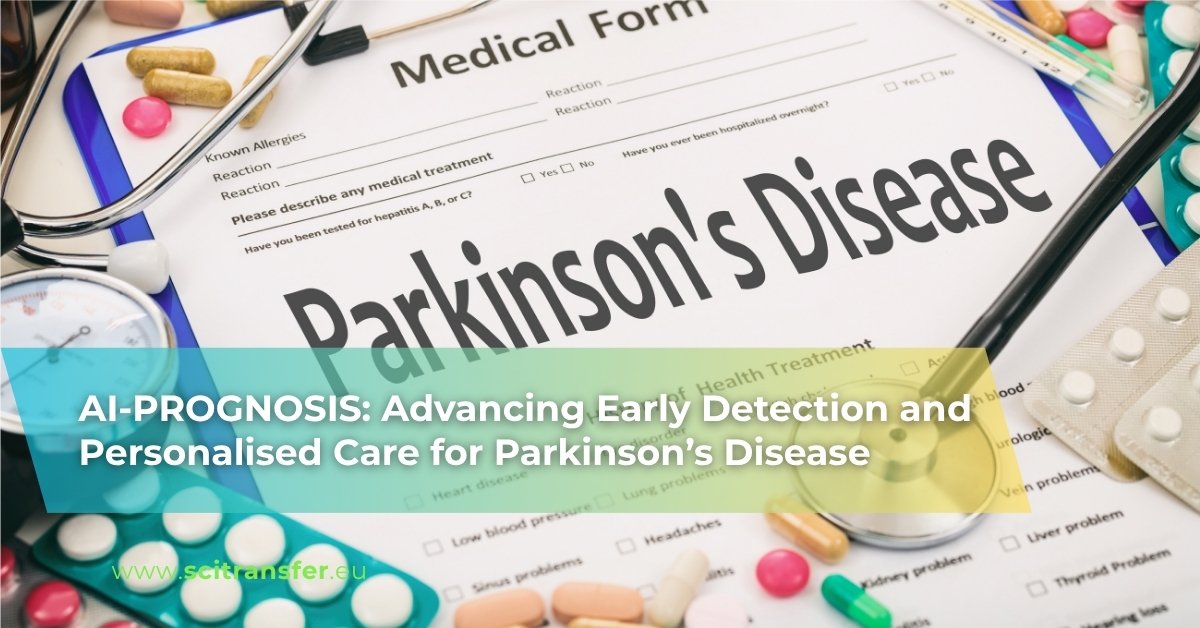
Across Europe, Parkinson’s disease (PD) remains one of the most complex and challenging neurodegenerative disorders. It affects millions of people and remains difficult to diagnose early and treat effectively. Early symptoms are often subtle and overlap with other conditions, leading to delayed diagnosis—frequently only after significant neurological damage has occurred.
In response to this pressing medical and societal challenge, the EU-funded project AI-PROGNOSIS is working to transform how Parkinson’s disease is detected, monitored, and managed.
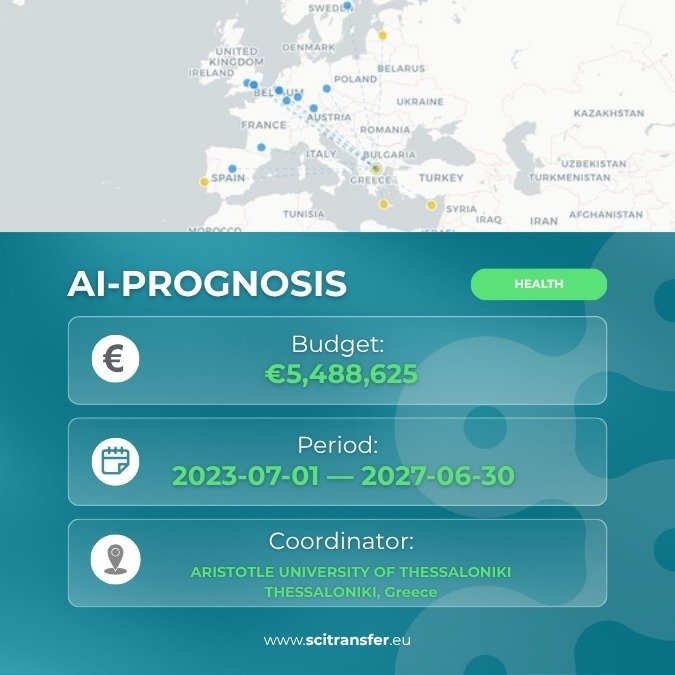
Funded with approximately €5.3 million under the Horizon Europe programme, AI-PROGNOSIS brings together a multidisciplinary consortium to integrate cutting-edge artificial intelligence into clinical practice. Its ambition is both scientific and societal: to deliver trustworthy, explainable AI tools that support earlier diagnosis, enable personalised treatment, and ultimately improve quality of life for people at risk of or living with Parkinson’s disease.
Rethinking a Complex and Heterogeneous Disease
Parkinson’s disease is highly heterogeneous. Its development is influenced by a combination of genetic, environmental, and lifestyle factors, while its symptoms range from motor impairments—such as tremors and rigidity—to non-motor manifestations including sleep disturbances, cognitive decline, and mood disorders.
This variability makes both diagnosis and treatment particularly challenging.
AI-PROGNOSIS addresses this complexity by developing predictive models that integrate multiple sources of patient data, including clinical records, phenotypic profiles, genetic information, and digital biomarkers collected through everyday technologies. By combining these data streams, the project aims to uncover patterns that are not detectable through conventional clinical assessment.
This approach supports a shift from reactive to proactive care—identifying early indicators of disease and assessing individual risk before significant progression occurs.

Unlocking the Potential of Digital Biomarkers
A key innovation of AI-PROGNOSIS lies in its use of digital biomarkers—objective indicators of disease risk or progression captured through smartphones, wearable devices, and other everyday technologies.
For Parkinson’s disease, these biomarkers may include movement patterns, gait dynamics, and subtle changes in speech. Because they are collected continuously in real-world settings, they offer a far more detailed and dynamic picture of a patient’s condition than periodic clinical visits.
Integrated into AI models, these data enable more accurate tracking of disease progression in near real time. This supports not only earlier diagnosis but also continuous monitoring, allowing healthcare professionals to adjust treatment strategies based on up-to-date, objective evidence.
From Data to Clinical Decision-Making
At the core of AI-PROGNOSIS is the development of explainable AI systems. Unlike “black box” models, these systems provide transparent and interpretable outputs—an essential requirement in clinical environments where trust and accountability are critical.
The project is translating its research into a validated, privacy-aware toolkit designed for healthcare professionals. This toolkit will support three key functions:
- Early screening for Parkinson’s disease
- Monitoring disease progression
- Optimising treatment strategies
One of the most persistent challenges in Parkinson’s care is selecting the most effective medication regimen. This process often involves trial and error, leading to delays and suboptimal outcomes. AI-PROGNOSIS aims to improve this by predicting individual patient responses to treatment, enabling more precise and efficient therapeutic decisions.
Empowering Patients and Engaging Stakeholders
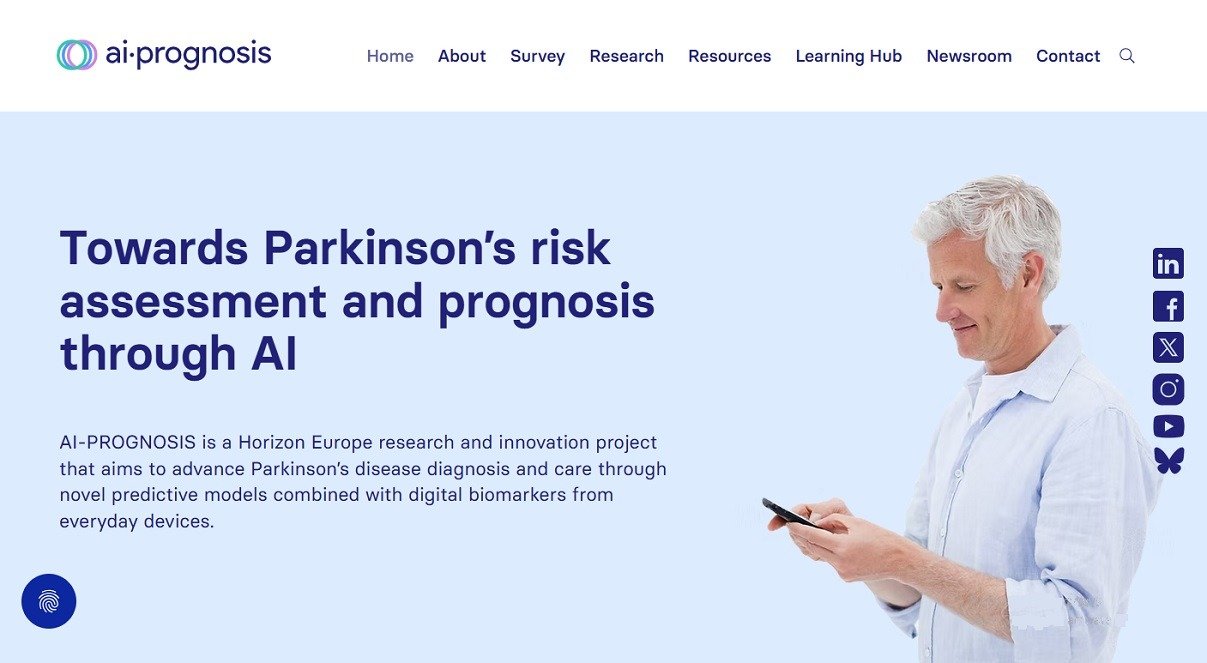
While grounded in advanced technology, AI-PROGNOSIS is fundamentally human-centred. The project is designed not only to support clinicians but also to empower individuals with actionable insights into their health status and risk profile.
Stakeholder engagement is central to this approach. The project brings together researchers, clinicians, patients, and other stakeholders to ensure that its solutions are scientifically robust, ethically sound, and aligned with real-world needs.
A European Initiative with Broader Impact
AI-PROGNOSIS reflects Europe’s strategic commitment to responsible and trustworthy AI in healthcare. By prioritising transparency, privacy, and clinical relevance, the project sets a benchmark for the integration of artificial intelligence into healthcare systems.
Its impact may extend beyond Parkinson’s disease. The methodologies developed—particularly in multi-source data integration and digital biomarkers—have the potential to be adapted to other neurodegenerative and chronic conditions, contributing to the broader advancement of personalised, data-driven medicine.

Investing in Sustainable Healthcare Innovation
With a budget of approximately €5.3 million, AI-PROGNOSIS represents a targeted investment in the future of European healthcare. Its approach has the potential to reduce long-term healthcare costs by enabling earlier diagnosis, improving treatment precision, and enhancing patient adherence.
The project also contributes to the broader objectives of Horizon Europe by fostering scientific excellence, cross-border collaboration, and tangible societal impact.
Towards a New Standard of Care
As AI-PROGNOSIS progresses, it is helping to define a new paradigm for Parkinson’s disease management—one that is predictive, personalised, and data-driven.
By combining advanced artificial intelligence with real-world patient data, the project is reshaping how Parkinson’s disease is understood and treated. The result is a vision of healthcare in which early detection becomes standard practice, treatments are tailored to the individual, and technology supports better outcomes through informed, evidence-based decisions.
For Europe and beyond, AI-PROGNOSIS represents not just a research initiative, but a meaningful step towards a more intelligent, responsive, and patient-centred healthcare system.
Autor: Radoslav Todorov
Images: canva.com, sciencetransfer.eu, ai-prognosis.eu
Sources: