
As neuroscience converges with artificial intelligence and high-performance computing, Europe is taking a decisive step to lead this transformation. At the heart of this effort is EBRAINS 2.0—a large-scale European research infrastructure designed to reshape how the brain is studied and how that knowledge is translated into real-world impact.
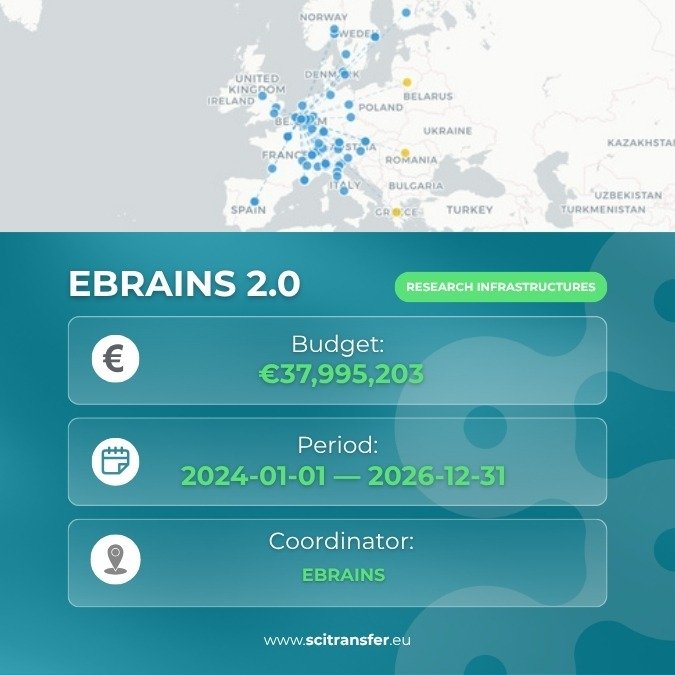
Backed by nearly €38 million under the Horizon Europe programme, EBRAINS 2.0 goes beyond a traditional research project. It is a federated scientific ecosystem that connects neuroscientists, clinicians, and AI specialists across disciplines and borders. Its objective is clear: to advance our understanding of the human brain—from molecules to the whole brain—and convert that knowledge into tangible benefits for medicine, technology, and public health.
A New Standard for Digital Neuroscience Research
EBRAINS 2.0 provides researchers with integrated access to a comprehensive suite of tools and services. These include multi-scale brain atlases, FAIR (Findable, Accessible, Interoperable, Reusable) datasets, digital brain models, and high-performance computing (HPC) resources.
By bringing these components together within a unified infrastructure, EBRAINS enables new modes of research that are collaborative, reproducible, and data-driven. Instead of fragmented efforts across institutions, researchers can work within a shared environment where data, models, and insights are continuously exchanged and refined.
A central objective is the development of next-generation brain atlases spanning cellular, regional, and whole-brain levels. These are linked with multi-modal datasets and connectomic data, capturing both healthy and pathological states. This integrated approach supports a more comprehensive understanding of brain structure and function.

From Data to Digital Brain Models
A defining feature of EBRAINS 2.0 is its focus on advanced brain modelling. By combining large-scale datasets with simulation technologies, researchers can develop digital representations of brain structure and activity.
These models enable scientists to simulate disease progression, test hypotheses, and explore potential interventions in a controlled virtual environment. This approach can accelerate research timelines, reduce costs, and support more targeted experimental design before clinical validation.
High-performance computing plays a critical role in this process. EBRAINS supports large-scale simulations on advanced computing infrastructures, including systems aligned with Europe’s exascale ambitions. This capability allows researchers to process and analyse complex datasets at unprecedented scale.
Advancing Medicine and Societal Impact
Neurological and psychiatric disorders remain a major societal challenge across Europe. Conditions such as Alzheimer’s disease, epilepsy, and depression affect millions of people and place significant pressure on healthcare systems.
EBRAINS 2.0 contributes to addressing these challenges by enabling more precise research into disease mechanisms and supporting the development of improved diagnostics, therapies, and prevention strategies. Clinicians and researchers benefit from access to integrated data and modelling tools that support more informed decision-making and hypothesis testing.
Beyond neuroscience, the infrastructure has applications in related domains, including biomedicine, artificial intelligence, and neuro-inspired computing. Its capabilities also support emerging fields such as neurorobotics and cognitive computing systems.
Embedded in the European Research Ecosystem
EBRAINS 2.0 builds on the legacy of the Human Brain Project (HBP), extending its scientific and technological foundations into a sustainable, long-term infrastructure.
It is closely aligned with key European initiatives, including the European Open Science Cloud (EOSC) and the EuroHPC Joint Undertaking. These connections ensure interoperability, scalability, and integration within Europe’s broader research and innovation landscape.
At the same time, EBRAINS maintains a global outlook by providing open access to services and fostering international collaboration, reinforcing Europe’s leadership in digital neuroscience.
Building Capacity and Community
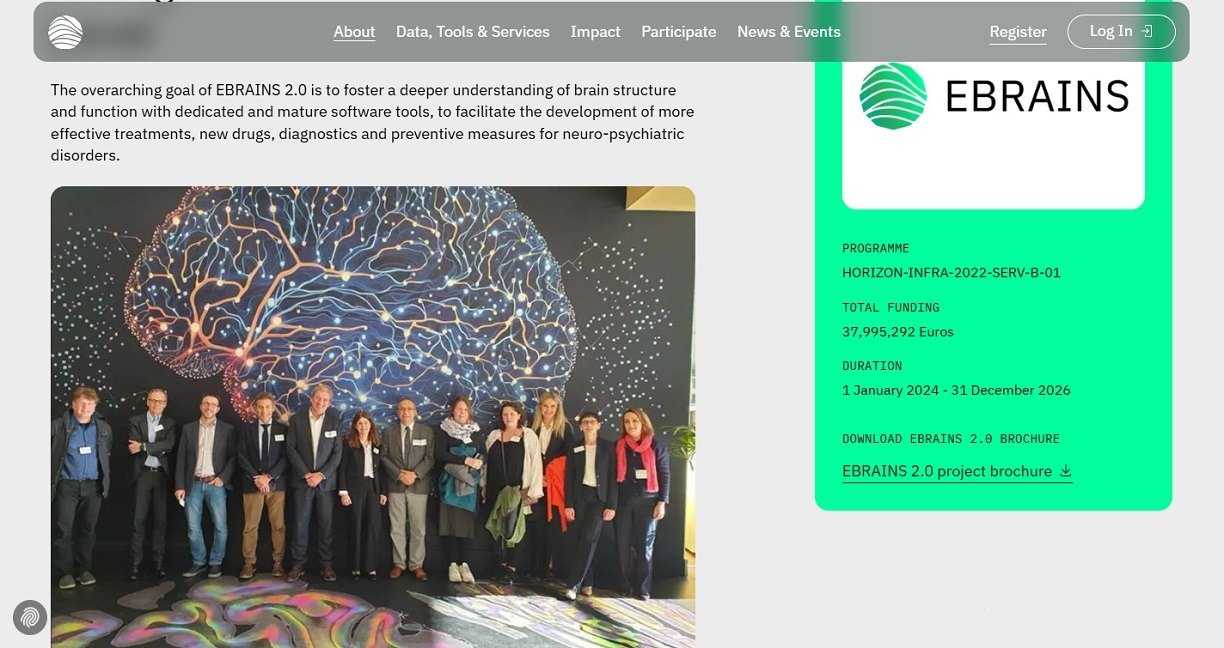
In addition to its technical capabilities, EBRAINS 2.0 places strong emphasis on training, education, and knowledge transfer. It supports researchers, industry actors, and SMEs in adopting advanced neuroscience tools and methodologies.
By lowering barriers to access and promoting interdisciplinary collaboration, the project helps build a diverse and skilled user community. This approach ensures that the infrastructure’s benefits are widely distributed and that innovation is not confined to a limited number of institutions.
A Strategic Investment in Europe’s Scientific Future
With nearly €38 million in EU funding, EBRAINS 2.0 represents a significant strategic investment in research infrastructure. It reflects the growing recognition that understanding the brain is not only a scientific priority but also a societal imperative.
By accelerating discovery, enabling collaboration, and supporting innovation, EBRAINS 2.0 strengthens Europe’s position in a highly competitive global landscape where advances in neuroscience and AI are increasingly interconnected.

Looking Ahead
As EBRAINS 2.0 continues to evolve, it is set to become a central hub for digital neuroscience in Europe. By integrating data, tools, and expertise across disciplines and borders, it exemplifies a new generation of research infrastructures—open, collaborative, and impact-driven.
For researchers, institutions, and innovators seeking to engage with cutting-edge neuroscience and AI, EBRAINS 2.0 offers a powerful platform to collaborate, experiment, and scale new ideas.
Autor: Radoslav Todorov
Images: canva.com, scitransfer.eu, ebrains.eu
Sources: