
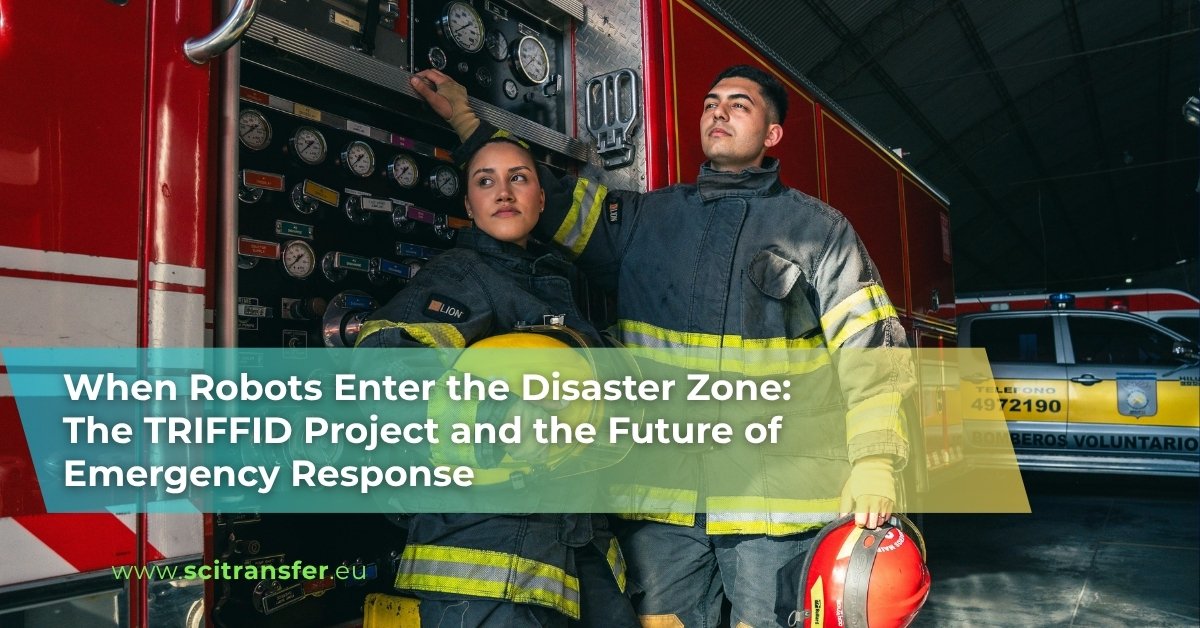
When disaster strikes—whether an earthquake, industrial accident, or large-scale fire—time is measured in lives. First responders must operate in unstable environments, often with limited visibility and incomplete information. In these conditions, situational awareness is as critical as speed.
The Horizon Europe–funded TRIFFID project addresses this challenge by equipping emergency teams with advanced robotic support systems designed to enhance decision-making, reduce risk, and improve operational efficiency.
A European Initiative at the Intersection of Robotics and Civil Protection
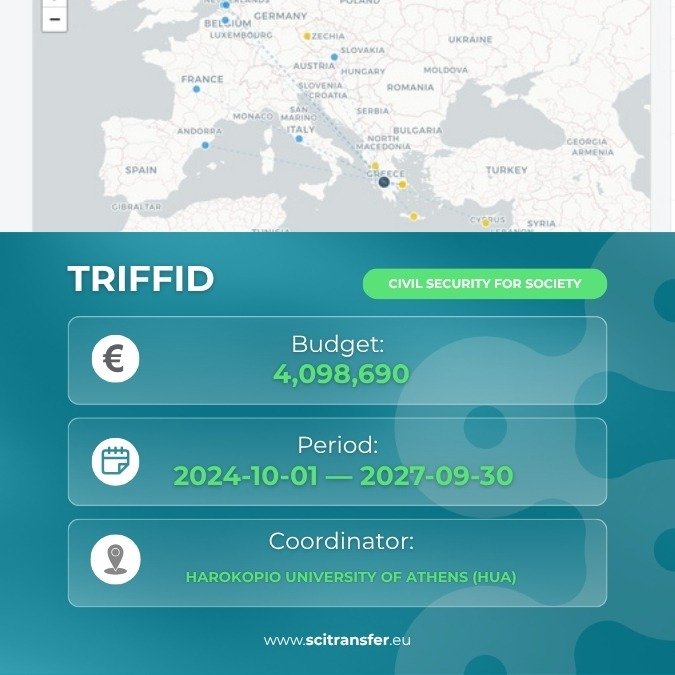
With a total budget of approximately €4.1 million, TRIFFID (auTonomous Robotic aId For increasing FIrst responDers efficiency) brings together 16 partners from across Europe. Coordinated by Harokopio University of Athens, the project runs from October 2024 to September 2027.
Positioned at the intersection of robotics, artificial intelligence, and civil protection, TRIFFID aims to redefine how emergency operations are conducted—shifting from reactive response to informed, data-driven intervention.
Robotic Systems as Operational Team Members
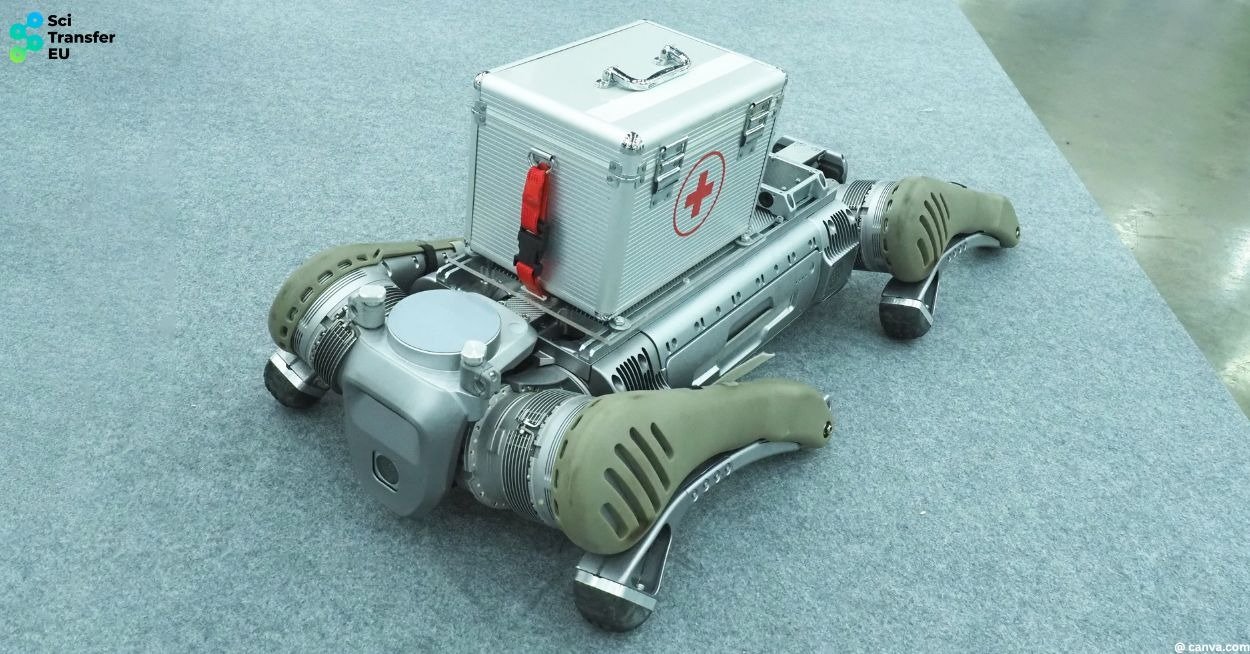
At its core, TRIFFID develops coordinated teams of robotic platforms capable of operating directly in disaster zones. These systems are designed not as experimental prototypes, but as deployable tools for real-world emergency scenarios.
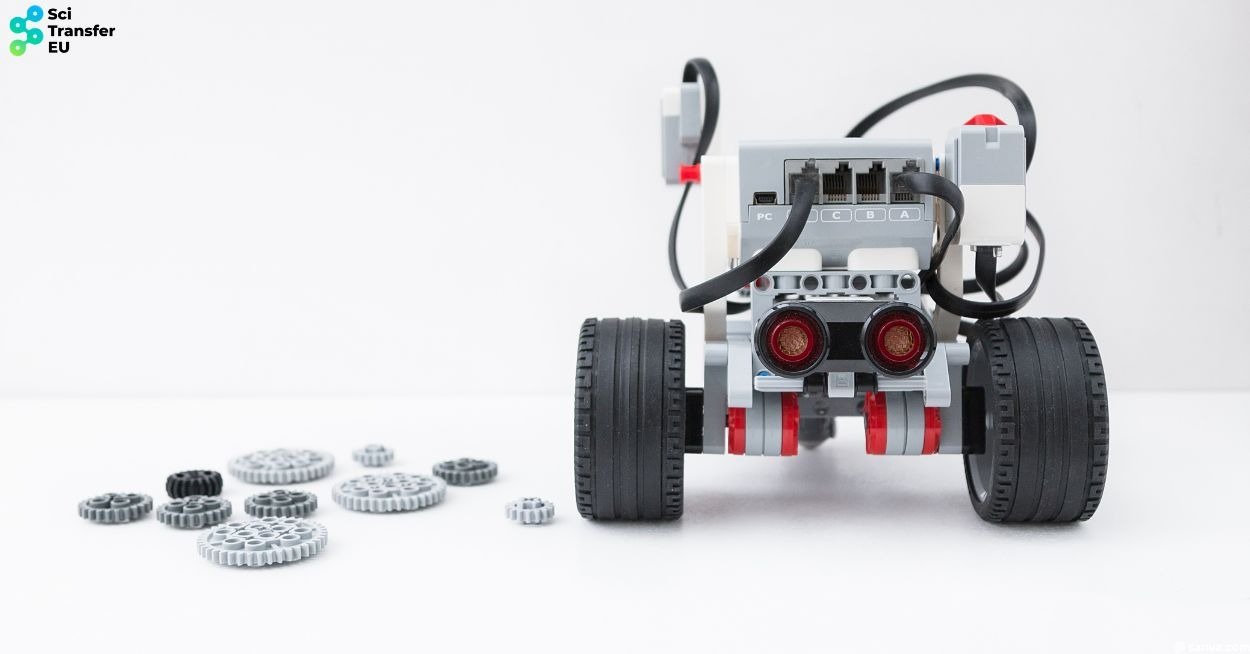
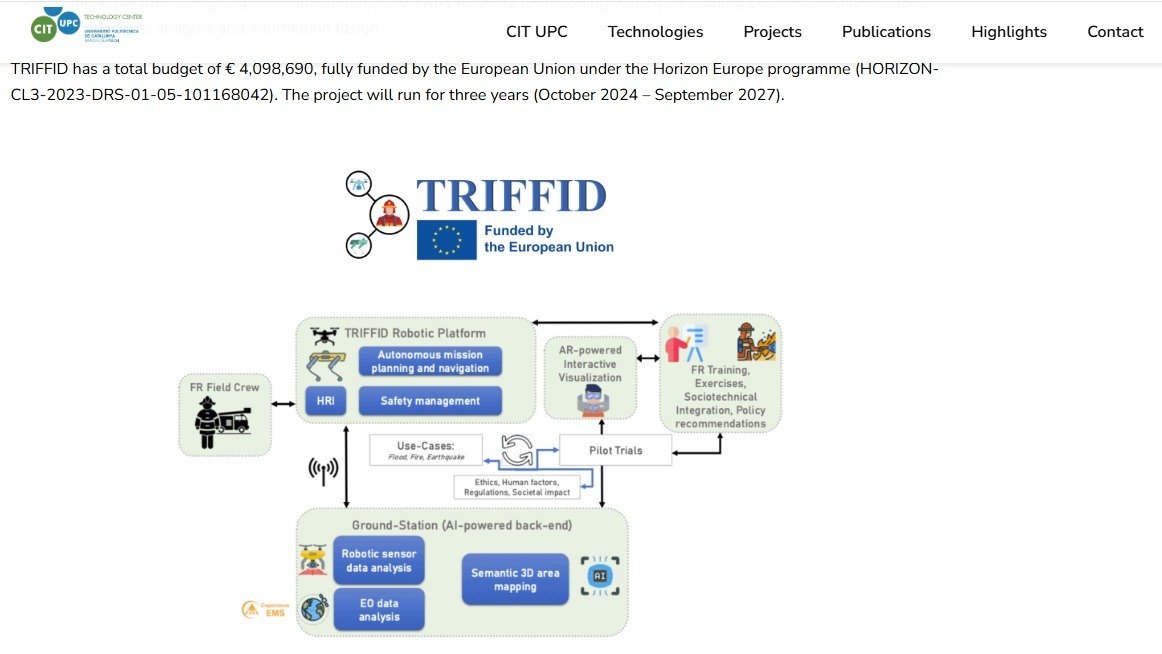
The project combines unmanned ground vehicles (UGVs) and unmanned aerial vehicles (UAVs), enabling hybrid capabilities across complex terrains. Powered by advanced AI, these platforms can navigate hazardous environments autonomously and adapt to rapidly changing conditions.
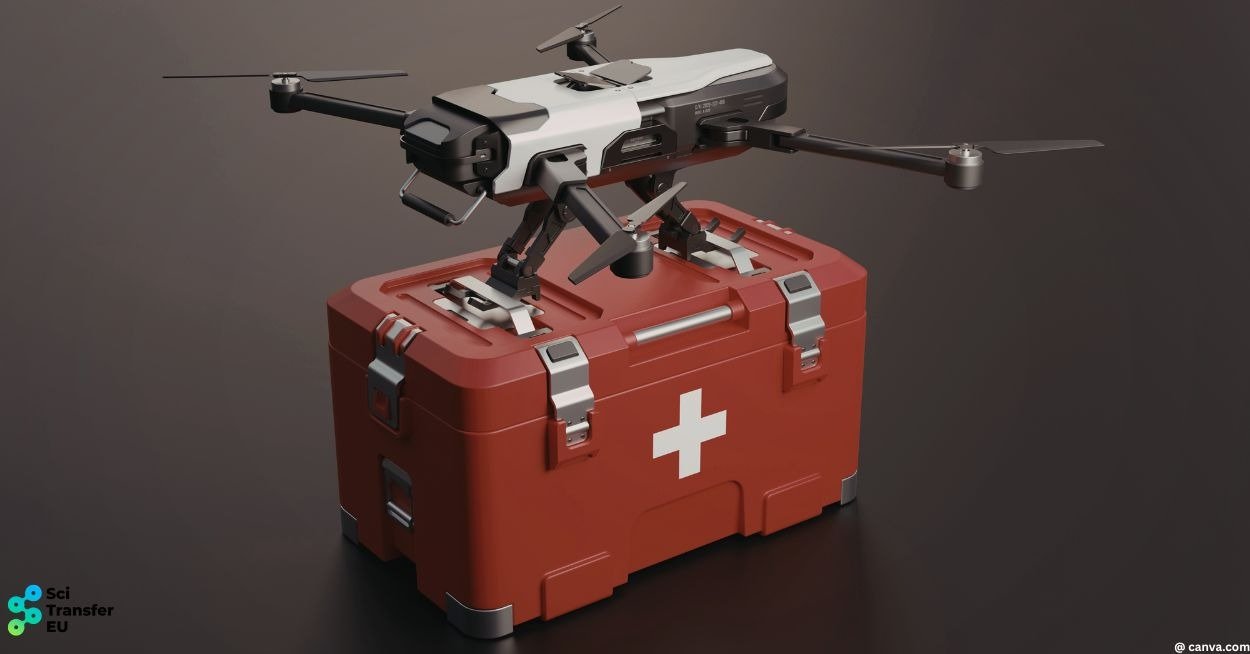
In practice, this allows robots to:
- Enter collapsed or unstable structures
- Operate in smoke-filled or low-visibility environments
- Search for survivors and assess structural risks
- Generate detailed environmental maps before human deployment
By taking on high-risk reconnaissance tasks, these systems reduce exposure for human responders while accelerating situational assessment.
Enhancing Human Decision-Making Through AI
A defining feature of TRIFFID is its human-centred approach to autonomy. Rather than replacing human input, the system is designed to support it.
Robots operate with a degree of cognitive autonomy, enabling real-time adaptation without constant supervision. At the same time, first responders retain control through high-level commands and oversight.
All data collected in the field is transmitted to a central ground station equipped with an advanced augmented reality (AR) interface. This interface integrates inputs from multiple robotic units into a unified, near-real-time operational picture.
The result is an interactive semantic map that highlights hazards, key structures, and points of interest—significantly improving situational awareness compared to traditional methods.
Integration with Europe’s Civil Protection Ecosystem
TRIFFID places strong emphasis on compatibility with existing emergency response frameworks. The project considers not only technological innovation, but also organisational and regulatory realities across Europe.
The consortium reflects this multidisciplinary approach, bringing together academic institutions, civil protection agencies, and operational stakeholders. Partners include the Universitat Politècnica de Catalunya (UPC), Vrije Universiteit Brussel, the Hellenic Fire Service, and Veiligheidsregio Rotterdam-Rijnmond, among others.
This ensures that system development is grounded in operational needs and aligned with real deployment conditions.
Building Trust, Skills, and Adoption Pathways
Recognising that technology adoption depends on user confidence, TRIFFID incorporates training and knowledge transfer as core components.
The project develops:
- Dedicated training curricula for first responders
- Practical exercises and simulation scenarios
- Knowledge-sharing activities across stakeholder groups
In parallel, TRIFFID addresses social, ethical, and legal considerations, including trust in autonomous systems, usability, and regulatory compliance. This proactive approach reduces barriers to adoption and supports long-term integration.
From Research to Real-World Impact
As a Horizon Europe Research and Innovation Action (RIA), TRIFFID focuses on both technological advancement and validation in realistic conditions. Its ambition goes beyond individual components to deliver a fully integrated system for disaster response.
The project’s impact will ultimately be measured through:
- Faster and more informed response times
- Reduced risk for emergency personnel
- Improved coordination in complex environments
In a context of increasing climate-related and urban risks, such capabilities are becoming essential for resilient emergency management systems.
A Glimpse into the Future of Emergency Response
TRIFFID illustrates a future in which human expertise and intelligent machines operate in close coordination. By combining robotics, AI, and advanced visualisation tools, the project enhances—not replaces—human judgment.
As development progresses, TRIFFID is positioned to set a new benchmark for disaster response in Europe: safer, smarter, and more connected.
For updates and collaboration opportunities, visit the project’s official website and communication channels.
Autor: Radoslav Todorov
Images: canva.com, scitransfer.eu, cit.upc.edu
Sources: