
Across Europe, cities face a shared and urgent challenge: transforming urban transport systems to make them not only greener, but also safer, fairer, and accessible to all. While technological innovation is often seen as the main driver of this transition, it is increasingly clear that sustainable mobility depends as much on people as on infrastructure.
The EU-funded ELABORATOR project distinguishes itself by placing citizens—especially those most at risk of exclusion—at the centre of this transformation.
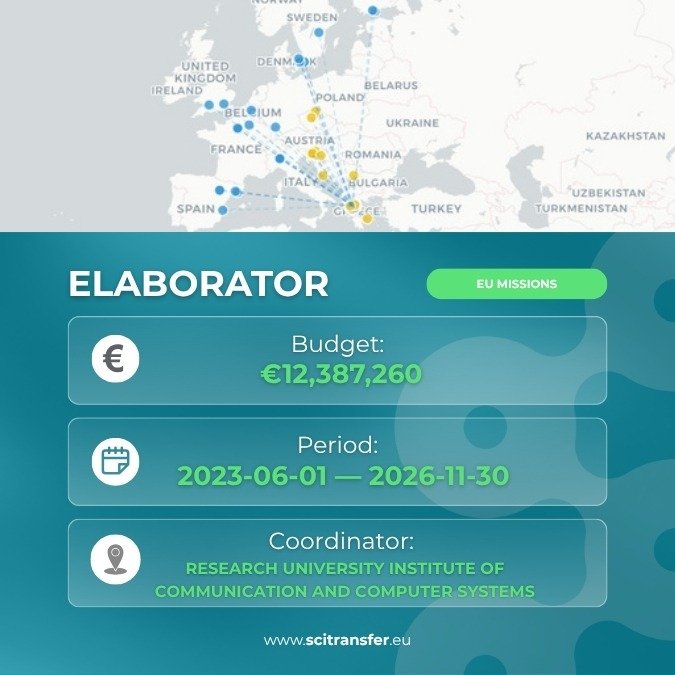
Funded with approximately €11.35 million under the EU Mission on Climate-Neutral and Smart Cities, ELABORATOR goes beyond traditional research. It acts as a large-scale, real-world demonstration of how cities can co-create mobility solutions with their residents—testing approaches, refining them in practice, and building a transferable model for others to follow.
A Living Lab for Urban Mobility Innovation
At its core, ELABORATOR operates as a European living lab, bringing together 12 cities to design, test, and implement innovative mobility solutions in real-life urban environments.
The cities are structured into two groups:
- Lighthouse cities—Milan, Copenhagen, Helsinki, Issy-les-Moulineaux, Zaragoza, and Trikala—where solutions are developed and demonstrated
- Follower cities—Lund, Liberec, Velenje, Ioannina, Split, and Krusevac—which adapt and replicate successful approaches
This model moves beyond isolated pilot actions. It creates a dynamic system of exchange, enabling knowledge, data, and experience to circulate between cities with diverse geographical contexts, sizes, and mobility challenges.
Through this “twinning” approach, solutions are not only tested but also adapted and scaled—maximising their relevance and impact across Europe.

Placing Inclusion at the Heart of Mobility
A defining feature of ELABORATOR is its explicit focus on groups vulnerable to exclusion, including older adults, persons with disabilities, and low-income communities.
Rather than treating these groups as passive beneficiaries, the project actively involves them as co-designers. Their lived experiences directly inform the development of solutions, ensuring that interventions are not only technically robust but also socially relevant.
This approach reframes a fundamental question: not just how to make transport more efficient, but efficient for whom. In doing so, ELABORATOR contributes to a broader shift in urban mobility—aligning sustainability goals with social equity.
From Smart Tools to Reimagined Public Space
ELABORATOR tests a wide range of innovations that reflect the complexity of urban mobility systems, including:
- Smart enforcement tools to improve safety and compliance
- Dynamic reallocation and redesign of public space
- Shared mobility services as alternatives to private car use
- Integration of active and green modes such as walking and cycling
What unites these actions is a holistic approach. Rather than addressing challenges in isolation, the project considers how infrastructure, services, user behaviour, and policy frameworks interact.
This integrated perspective is essential for achieving climate-neutral cities, where emissions reduction must go hand in hand with improved quality of life.
Data-Driven Insights and Scalable Impact
A key strength of ELABORATOR lies in its commitment to evidence-based innovation. Across all participating cities, the project gathers and analyses comprehensive datasets, including real-world usage patterns, stakeholder feedback, and insights generated through dedicated tools and methodologies.
These data serve multiple purposes:
- Understanding local mobility needs
- Assessing the effectiveness of interventions
- Continuously refining solutions
At the same time, they contribute to a shared knowledge base that can support replication in other European cities.
Importantly, ELABORATOR moves beyond experimentation. It delivers concrete outputs—including guidelines, policy recommendations, and future roadmaps—to support the integration of successful solutions into Sustainable Urban Mobility Plans (SUMPs).
Strengthening Capacity Across European Cities
In addition to technological and policy innovation, ELABORATOR places strong emphasis on capacity building.
By actively involving local authorities, stakeholders, and communities, the project enhances cities’ ability to design and implement inclusive mobility solutions independently. This is particularly valuable for Follower cities, which adapt tested approaches to their specific local contexts.
Rather than promoting a one-size-fits-all model, ELABORATOR develops a flexible and transferable framework for sustainable mobility.
The project also nurtures a growing community of practice through its digital platforms and professional outreach activities, facilitating knowledge exchange and collaboration beyond the core consortium.
Advancing a European Vision for Inclusive Mobility
ELABORATOR reflects a broader evolution in European urban policy—one that recognises that the transition to climate neutrality must be inclusive, participatory, and grounded in real-world conditions.
By combining co-creation with innovation and practical implementation, the project offers a robust and scalable approach to urban mobility transformation.
Its value lies not only in the solutions it develops, but in the methodology it advances: bringing together citizens, cities, and research in a shared effort to design more inclusive and sustainable urban environments.
As European cities continue to navigate this transition, ELABORATOR demonstrates that meaningful and lasting change is possible when innovation is guided by people’s needs.

Autor: Radoslav Todorov
Images: canva.com, scitransfer.eu, elaborator-project.eu
Sources: