
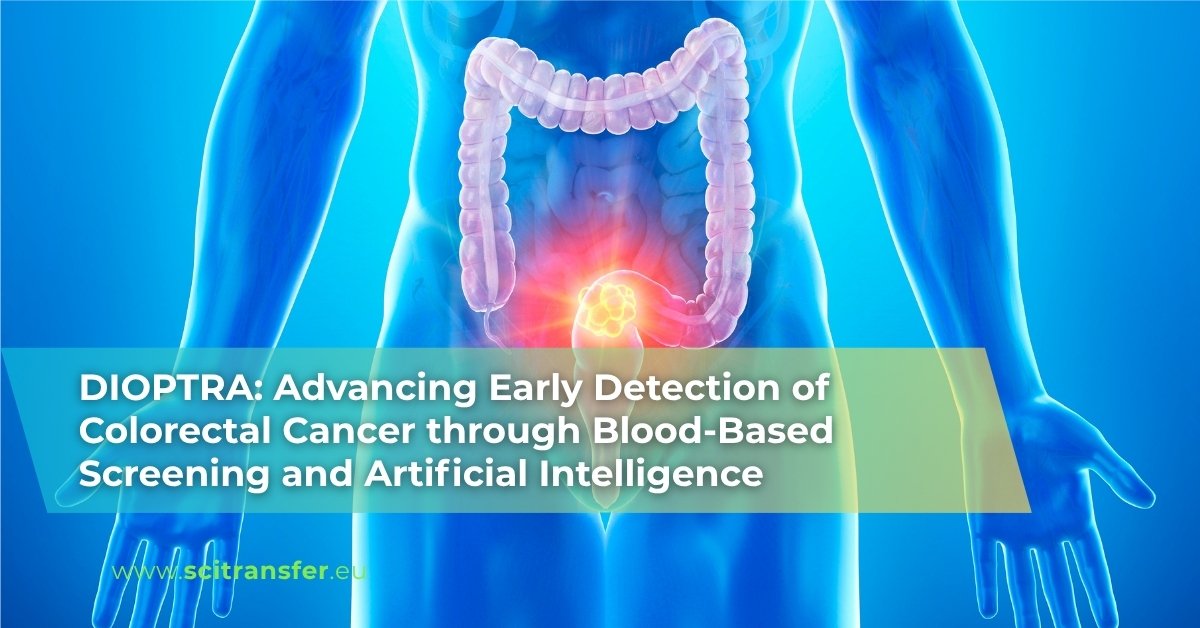
Colorectal cancer remains one of the leading causes of cancer-related mortality in Europe, despite being highly treatable when detected early. This creates a clear paradox: while effective screening methods exist, participation rates remain low, and many individuals fall outside current eligibility criteria based primarily on age.
Against this backdrop, the EU-funded DIOPTRA project is advancing a new approach—one that aims to transform how colorectal cancer risk is identified, assessed, and ultimately prevented.
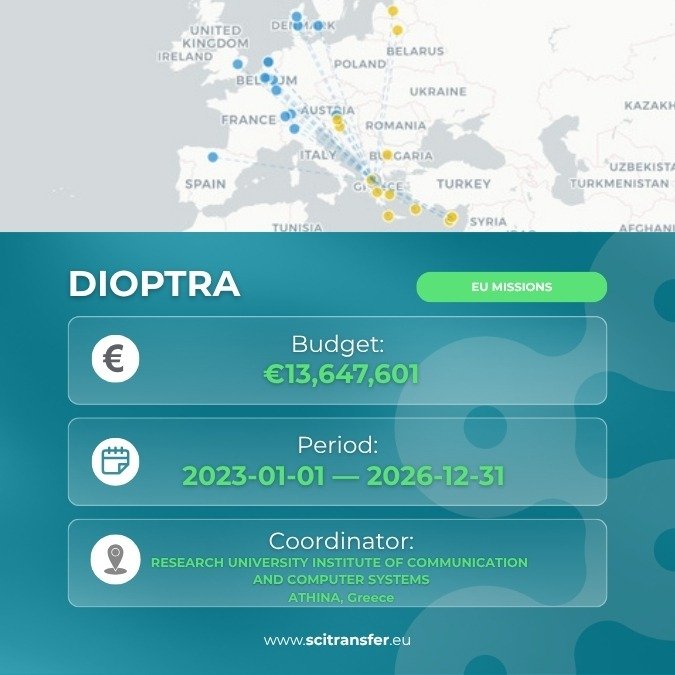
Launched in January 2023 and running until 2026, DIOPTRA (Early Dynamic Screening for Colorectal Cancer via Novel Protein Biomarkers Reflecting Biological Initiation Mechanisms) brings together scientific innovation, clinical expertise, and digital technologies. With a total budget of approximately €13.6 million under the Horizon Europe Cancer Mission, the project contributes to the EU’s strategic priority of improving cancer prevention and early detection.
A Shift from Reactive to Proactive Screening
At the core of DIOPTRA is a shift towards earlier, less invasive, and more personalised screening. Current programmes across Europe typically rely on stool-based tests or colonoscopy, often recommended only for individuals above a certain age. However, participation remains limited, and these methods can be perceived as inconvenient or uncomfortable.
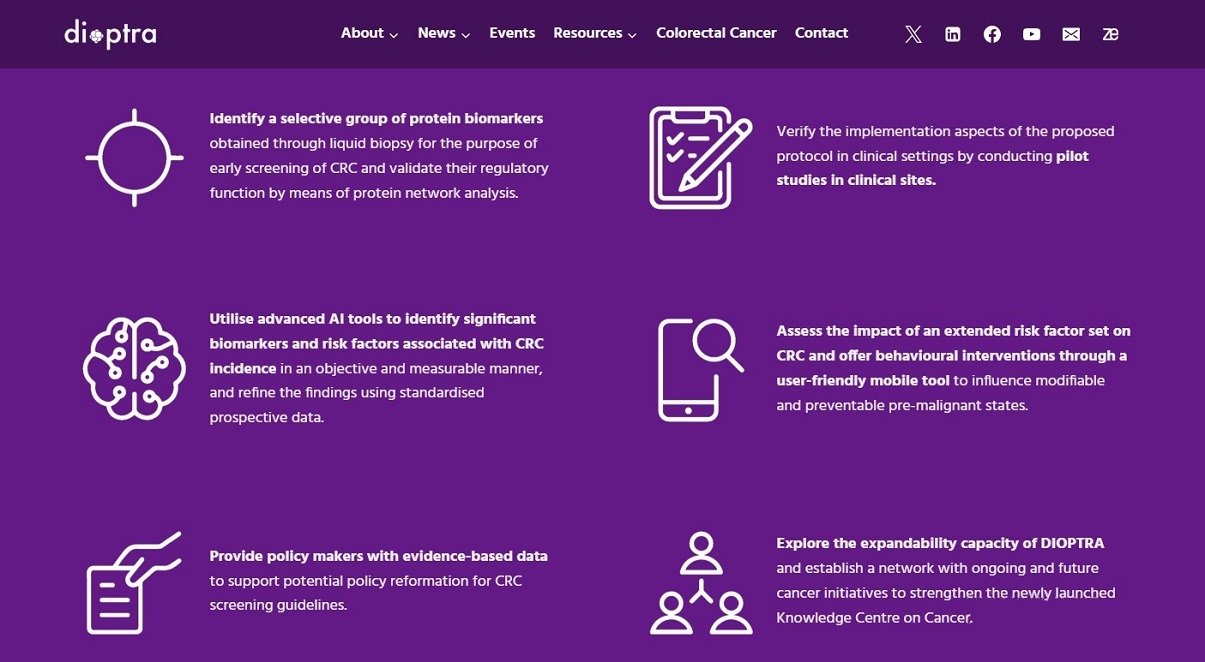
DIOPTRA addresses these barriers by developing a first-line screening approach based on standard blood tests. The project focuses on identifying protein biomarkers—biological signals detectable in blood—that are associated with the early stages of colorectal cancer development.
These biomarkers reflect underlying biological mechanisms that precede the onset of symptoms, offering a critical window for early intervention. If validated, this approach could reduce reliance on invasive procedures as an initial step, reserving colonoscopy for individuals identified as high risk through a simple blood test.
Integrating Artificial Intelligence and Risk Factors
A distinguishing feature of DIOPTRA is its integration of biomarker data with artificial intelligence (AI) and broader health information. Rather than analysing biomarkers in isolation, the project combines them with medical, behavioural, and lifestyle factors to generate comprehensive individual risk profiles.
AI plays a central role by analysing the combined predictive value of these variables. This enables the identification of complex patterns and correlations that are difficult to detect באמצעות conventional methods, supporting more accurate and personalised risk assessment.
In practice, this means that individuals of the same age may receive different screening recommendations based on their biological and lifestyle profiles. This level of personalisation represents a significant evolution from current screening models and aligns with the EU’s broader shift towards precision medicine.
Expanding Access and Participation
Low participation in colorectal cancer screening remains a persistent challenge across EU Member States. By simplifying and modernising the screening process, DIOPTRA aims to improve accessibility and uptake.
Blood-based testing is generally more acceptable than existing methods, which may involve stool samples or invasive procedures. By reducing both practical and psychological barriers, the project has the potential to increase participation and enable earlier detection.
Importantly, DIOPTRA also moves beyond rigid age-based criteria. By incorporating genetic, behavioural, and environmental risk factors, the project seeks to identify high-risk individuals regardless of age, broadening the reach of preventive care.
Scientific and Societal Impact
From a scientific perspective, DIOPTRA contributes to a deeper understanding of the biological processes underlying colorectal cancer initiation. Through the analysis of both tissue and blood samples, the project aims to validate a robust set of protein biomarkers for early risk detection.
The methodologies developed—particularly the combination of biomarker discovery with AI-driven analysis—have potential applications beyond colorectal cancer, including other diseases where early detection is critical.

From a societal perspective, the benefits are equally significant. Earlier detection improves survival rates while reducing the economic burden on healthcare systems. Treating advanced-stage cancer is considerably more resource-intensive than addressing the disease early. By enabling timely intervention, DIOPTRA supports both improved patient outcomes and long-term healthcare sustainability.
In addition, the project promotes awareness of modifiable risk factors, encouraging behavioural changes that can contribute to prevention.
A Collaborative European Effort
As part of the Horizon Europe Cancer Mission, DIOPTRA is embedded in a wider ecosystem of projects focused on cancer prevention and screening. This collaborative framework supports knowledge exchange and facilitates the translation of research findings into policy and clinical practice across Europe.
Further information about the project, including updates and results, is available via the official DIOPTRA website, its CORDIS project page, and its public communication channels. These platforms play a key role in disseminating results and raising awareness—an essential component of effective screening strategies.
Looking Ahead
As DIOPTRA progresses towards completion in 2026, its outcomes have the potential to reshape colorectal cancer screening in Europe. The project’s objective is to deliver a screening approach that is earlier, more accessible, and tailored to individual risk.
If successful, this model could significantly strengthen prevention strategies and inform future EU health policies. More broadly, DIOPTRA highlights a fundamental shift in healthcare: from reactive treatment to proactive risk identification.
By enabling earlier and more precise intervention, the project offers a promising pathway towards more effective and sustainable cancer care across Europe.
Autor: Radoslav Todorov
Images: canva.com, scitransfer.eu, dioptra-project.eu
Sources: