
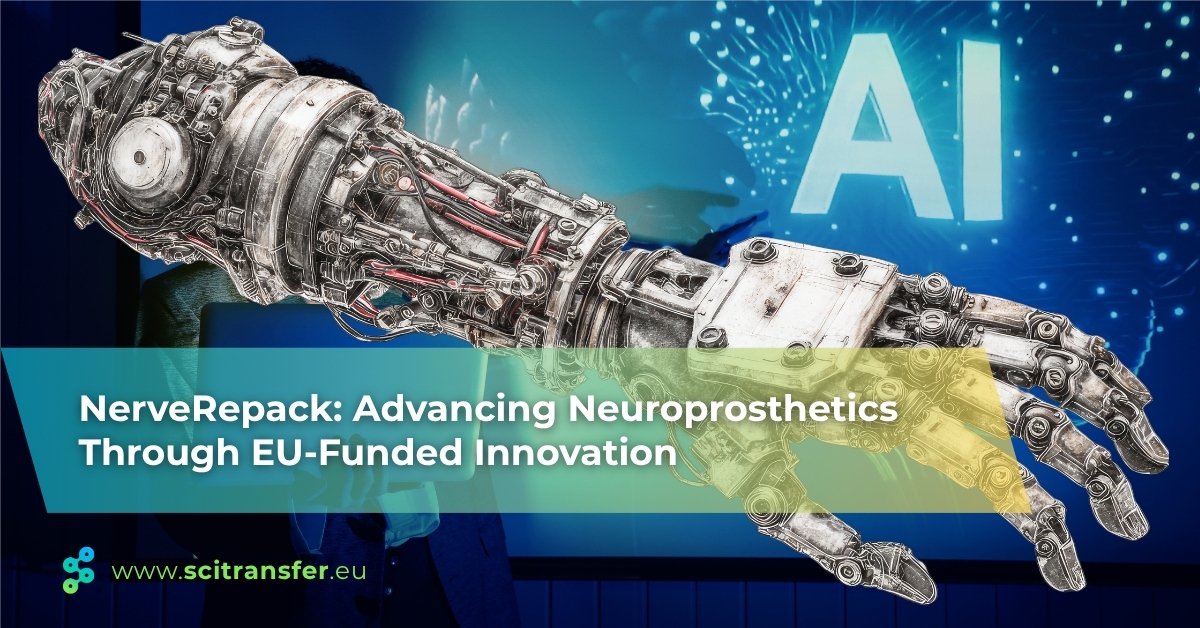
Across Europe, a new wave of scientific collaboration is redefining how severe physical disabilities are addressed. At the intersection of neuroscience, microelectronics, and robotics, the EU-funded NerveRepack project is working toward a long-standing goal: enabling seamless, two-way communication between the human nervous system and intelligent prosthetic and assistive devices.
Funded under Horizon Europe through the Key Digital Technologies Joint Undertaking (KDT JU), NerveRepack brings together multidisciplinary expertise to tackle one of the most complex challenges in modern medicine and engineering.
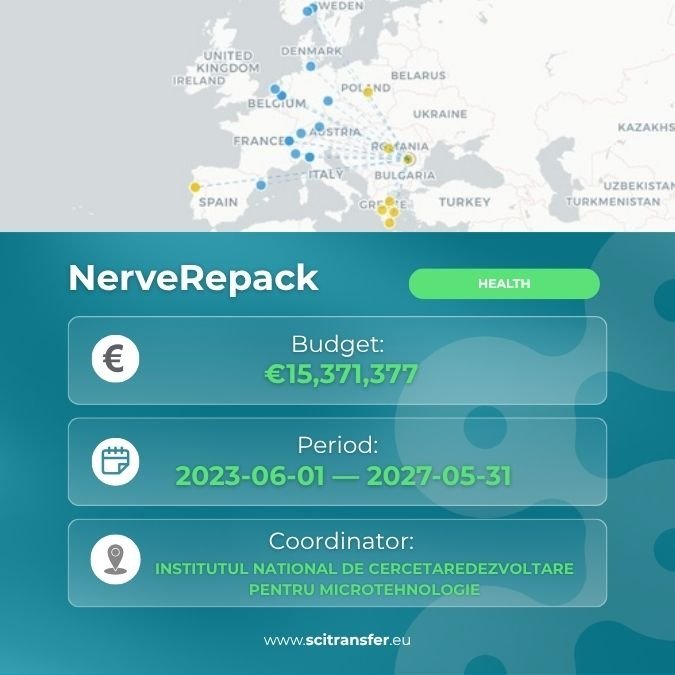
With a total budget of €15.37 million, including €5.38 million in EU funding, the project runs from June 2023 to May 2027. Its objective is not only to restore movement, but also to reintroduce sensation, autonomy, and quality of life for individuals living with limb loss or paralysis.
Enabling Direct Communication Between Brain and Device
Conventional prosthetic systems typically rely on surface-level muscle signals (e.g. EMG-based control), which can limit precision and responsiveness. NerveRepack moves beyond this approach by developing a bidirectional neural interface.
This interface enables communication in two directions: from the brain to the device, and from the device back to the user.
At the core of the system are implantable electrodes that connect directly to the patient’s nervous system. These electrodes:
- Transmit neural signals to external devices such as prosthetics and exoskeletons
- Deliver sensory feedback from the device back to the user
The result is a closed-loop system, allowing users to control movement more intuitively while regaining a sense of touch or feedback—capabilities largely absent from current assistive technologies.
The implant integrates several advanced components into a compact module:
- Custom-designed signal-processing chips (ASICs)
- A microcontroller for system coordination
- Wireless communication via an embedded antenna
- Inductive wireless power transfer
- Energy storage using supercapacitors
Artificial intelligence plays a central role by interpreting neural signals and adapting to each user’s physiology. Over time, the system learns to recognise patterns of intent, enabling increasingly natural interaction.
Three Clinical Demonstrators
NerveRepack is designed with real-world application in mind. Its development is validated through three clinical demonstrators:
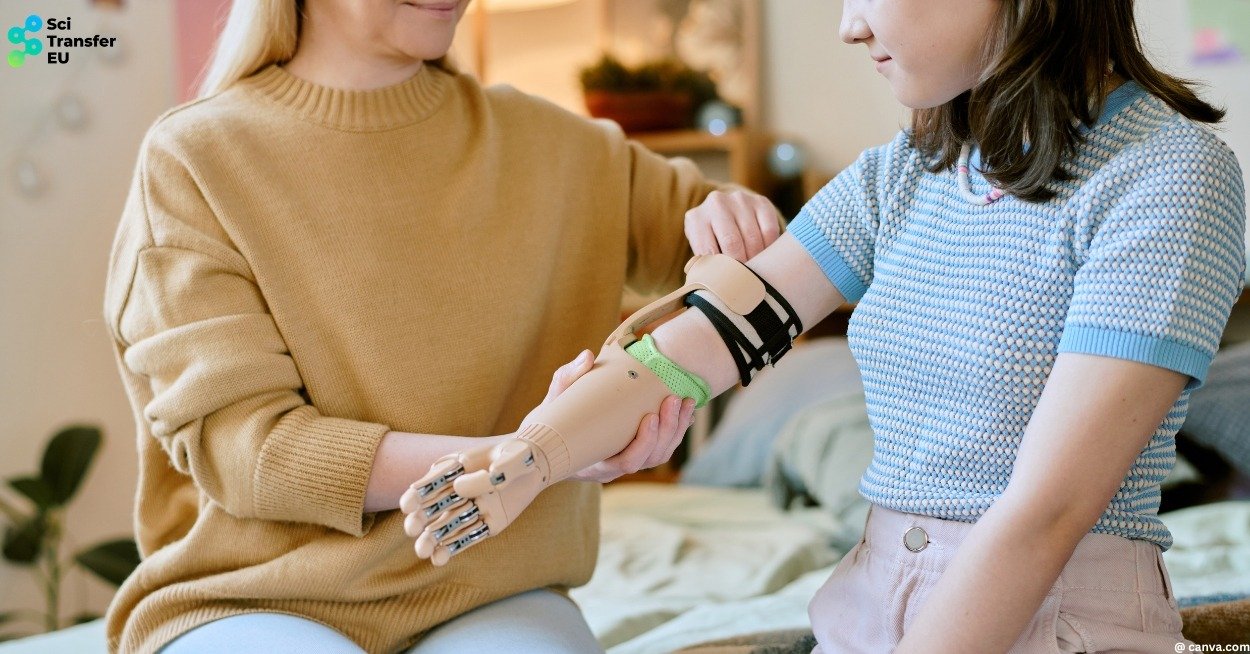
- Forearm amputees, using prosthetic limbs controlled via neural signals
- Patients with full lower limb paralysis, supported by advanced exoskeletons
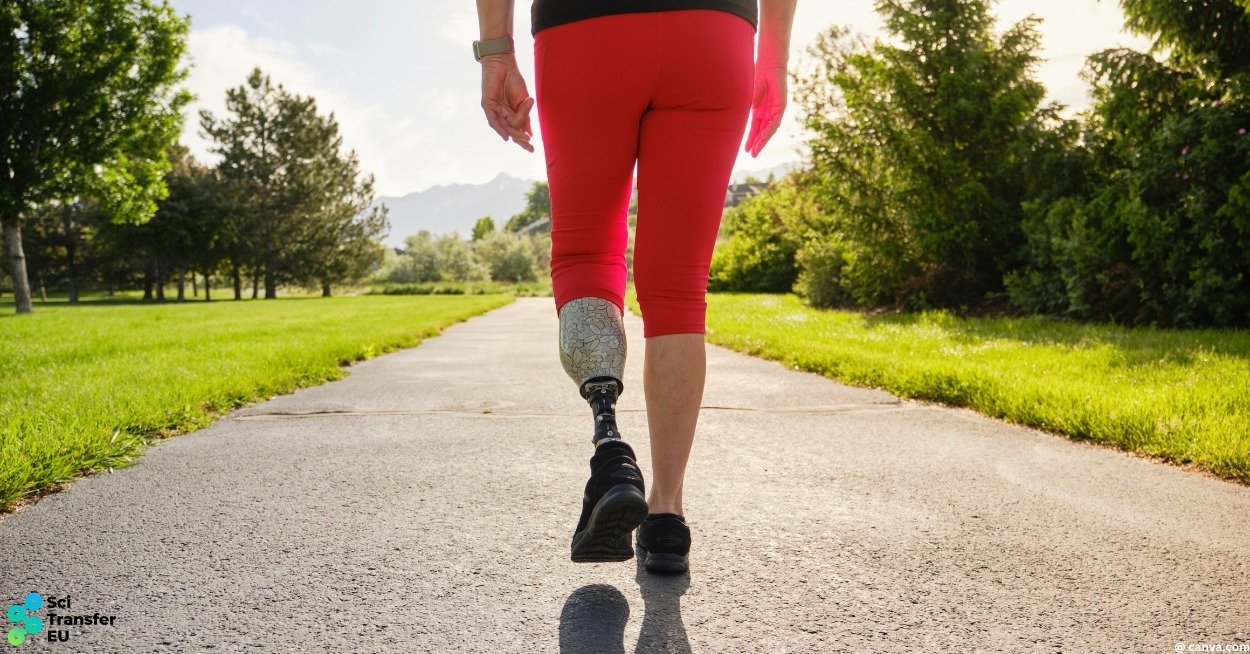
- Individuals with partial (single-leg) paralysis, benefiting from hybrid assistive systems
These demonstrators ensure that the technology is aligned with clinical needs and supports future translation into medical practice.
Driving Technological Convergence
The project brings together several cutting-edge fields, including:
- Miniaturised implantable electronics
- Wireless power and data transmission
- Biocompatible materials for long-term implantation
- Advanced microsurgical techniques
This convergence contributes to broader progress in human–machine interaction, with potential applications extending beyond rehabilitation to areas such as robotics and neurotechnology.
Societal Impact: From Assistance to Restoration
Beyond technical innovation, NerveRepack aims to shift the paradigm of assistive technology.
Current solutions often require significant cognitive effort and provide limited feedback. By contrast, NerveRepack seeks to restore a more natural link between intention and movement.
The potential impact spans multiple dimensions:
- Medical: Improved rehabilitation outcomes and long-term independence
- Economic: Reduced healthcare costs and increased workforce participation
- Social: Greater inclusion and autonomy for people with disabilities
This approach reflects a broader transition—from compensating for lost function to reconstructing it.
A European Collaboration with Global Relevance
NerveRepack highlights the value of coordinated European research and innovation. By bringing together expertise across disciplines and institutions, the project demonstrates how collaborative investment can accelerate progress in complex, high-impact fields.
Looking Ahead
As NerveRepack progresses toward its 2027 completion, it represents a significant step forward in neuroprosthetics and human–machine integration.
By enabling direct, adaptive communication between the nervous system and assistive devices, the project moves closer to a future in which prosthetics are not only functional tools, but integrated extensions of the human body.
If successful, NerveRepack will contribute to a new generation of assistive technologies—designed not just to support users, but to restore natural interaction with the world around them.
Explore the Project
For more information and updates:
- Project website: https://www.nerverepack.eu/
- Fraunhofer IZM project page: https://www.izm.fraunhofer.de/en/institut/projects/nerverepack.html
- CORDIS entry: https://cordis.europa.eu/project/id/101112347
- LinkedIn: https://linkedin.com/company/nerverepack
- Press release: https://www.imt.ro/projects/NerveRepack%20Press%20Release.pdf
Autor: Radoslav Todorov
Images: canva.com, scitransfer.eu, nerverepack.eu