
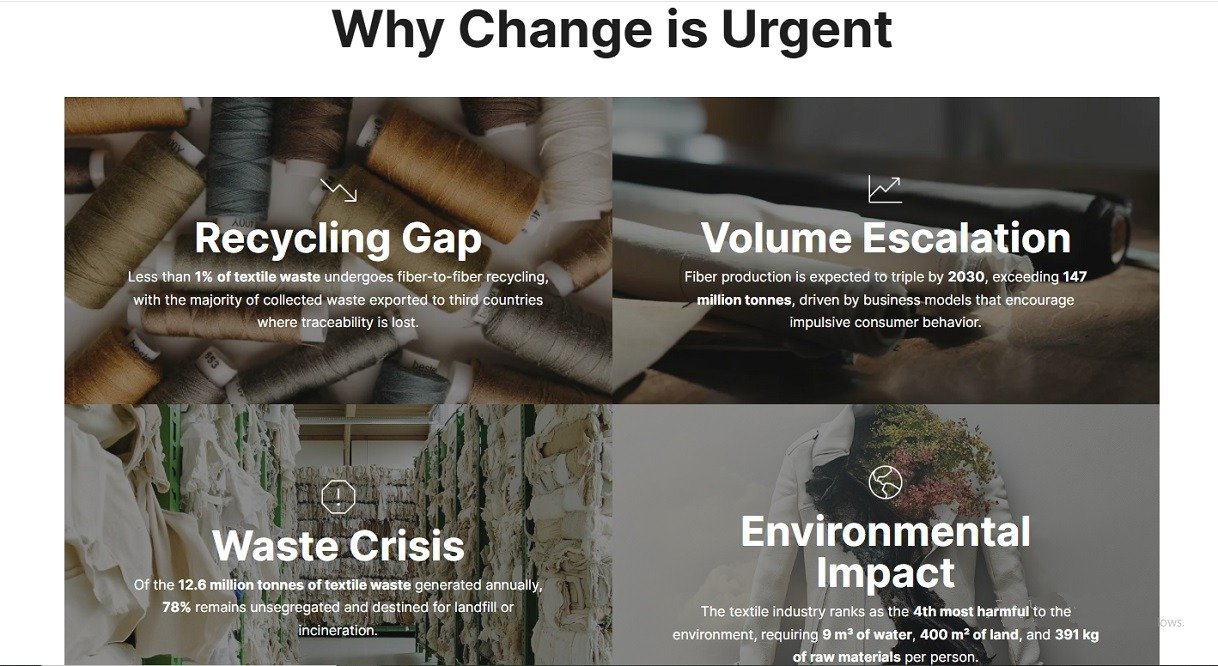
Across Europe, the fashion industry faces a growing paradox. While clothing production has never been more dynamic or accessible, the environmental cost of textile waste continues to rise at an alarming pace. Mountains of discarded garments, complex material blends, and insufficient recycling systems highlight the urgent need for a new model—one that is circular, traceable, and sustainable.
Enter TRUSTEX, a European research and innovation project that aims not only to improve textile waste management, but to fundamentally redesign how the system works.
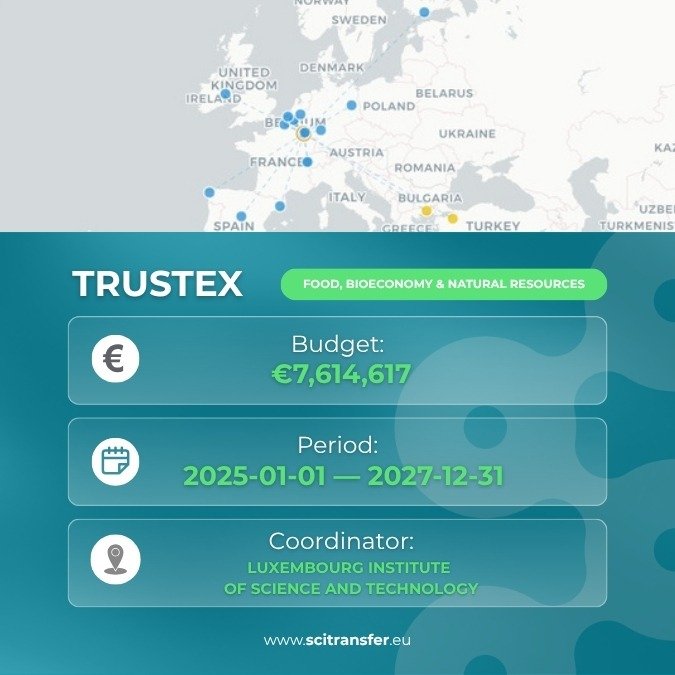
Launched in January 2025 and running through December 2027, TRUSTEX—short for Advancing Sustainable Textiles in the Circular Economy through Innovative EPR Schemes—has a total budget of over €7.6 million, with nearly €7 million funded by the European Commission under the Horizon Europe programme. Coordinated by the Luxembourg Institute of Science and Technology (LIST) and bringing together 21 partners, the project represents a significant investment in Europe’s ambition to lead in sustainable industry practices.
At its core, TRUSTEX addresses a critical question: how can responsibility for textile waste be more effectively shared, managed, and transformed into value?
A Systemic Shift Through Extended Producer Responsibility
Central to the project is Extended Producer Responsibility (EPR), a policy approach that assigns producers responsibility for the entire lifecycle of their products, including post-consumer waste. While EPR schemes exist in several sectors, their application in textiles remains fragmented and complex across Europe.
TRUSTEX tackles this challenge by analysing, testing, and refining EPR strategies specifically for textiles. Rather than offering purely theoretical recommendations, the project adopts a hands-on approach—piloting real-world solutions, identifying bottlenecks, and proposing actionable improvements.
From collection and sorting to reuse and recycling, every stage of the textile lifecycle is examined through a holistic lens.
A key strength of TRUSTEX lies in its collaborative governance. Guided by a Stakeholder Board composed of retail experts and industrial partners, the project ensures that its findings are grounded in operational realities. This continuous feedback loop aligns innovation with both market needs and evolving regulatory frameworks.
Digital Innovation Meets Circular Design
A major contribution of TRUSTEX is the integration of digital technologies with sustainable design. The project is developing digital product passports and advanced labelling systems that enable garments to be identified, tracked, and traced throughout their lifecycle.
For consumers, this means greater transparency—providing clear information on origin, composition, and end-of-life options. For recyclers and waste managers, these tools support more efficient sorting processes, reducing contamination and improving the quality of recycled materials.
These solutions are designed in alignment with upcoming European regulations, positioning TRUSTEX at the forefront of policy-driven innovation.
In parallel, the project focuses on upstream innovation through eco-design strategies. This includes the development of new fibres and “Design for Disassembly” approaches, making garments easier to recycle from the outset. By addressing challenges at the design stage, TRUSTEX shifts the focus from end-of-life treatment to lifecycle optimisation.
Bridging Science, Industry, and Society
Beyond its technical scope, TRUSTEX places strong emphasis on societal impact. The project aims to influence not only industry practices, but also consumer behaviour and public awareness.
Through a structured dissemination and communication strategy, its results will reach policymakers, businesses, and citizens alike. In a sector where consumer choices are निर्णt, increasing transparency and accessibility is essential.
Clear labelling and digital tools can empower individuals to make more informed decisions, helping to close the gap between awareness and action.
At the same time, TRUSTEX contributes to scientific advancement by generating new knowledge on textile recycling systems, material flows, and policy implementation. Its interdisciplinary approach—spanning engineering, data science, economics, and design—reflects the complexity of the challenge.
A Strategic Investment in Europe’s Future
With a total cost of €7,614,617 and an EU contribution of €6,999,316, TRUSTEX is more than a research initiative—it is a strategic investment in Europe’s environmental and economic resilience. As an Innovation Action under Horizon Europe, the project focuses on bringing solutions closer to market through prototyping, piloting, and demonstration.
Its positioning within the “Food, Bioeconomy & Natural Resources” funding area highlights the interconnected nature of sustainability challenges. Textiles are deeply linked to resource use, waste management, and climate impact.
TRUSTEX ranks among the top projects in its category, underscoring both its ambition and its relevance. Its above-average funding level further signals a strong commitment from the European Union to drive meaningful change in the textile sector.
Looking Ahead: From Pilot to Transformation
As TRUSTEX approaches the midpoint of its 36-month timeline, its success will ultimately depend on its ability to translate innovation into lasting transformation. The objective is not merely to improve existing systems, but to enable a new paradigm in which textiles are designed, used, and reused in a continuous loop.
If successful, TRUSTEX could serve as a blueprint for future EPR schemes across Europe and beyond—informing policy, guiding industry standards, and shaping future research.
For a sector often criticised for its environmental footprint, this represents a pivotal moment. By combining scientific rigour, technological innovation, and stakeholder collaboration, TRUSTEX offers a credible and forward-looking vision of a circular textile economy.
Learn more:
Official website: https://trustexproject.eu/
CORDIS project profile: https://cordis.europa.eu/project/id/101181901
In a world increasingly defined by resource constraints and environmental urgency, initiatives like TRUSTEX are not just valuable—they are essential.
Autor: Radoslav Todorov
Images: canva.com, scitransfer.eu, trustexproject.eu