

Europe is ageing. Over the coming decades, millions more Europeans will live into their seventies, eighties and beyond. Longer lives represent one of the greatest achievements of modern medicine, but they also raise an urgent question: how can health systems help older adults remain independent, active and mentally healthy for as long as possible?
Two of the most challenging conditions associated with ageing are dementia and frailty. These conditions rarely appear suddenly. Instead, they develop gradually through subtle changes in cognition, mobility and everyday behaviour. In many cases, these early warning signs remain unnoticed until daily life has already become significantly more difficult for patients and their families.
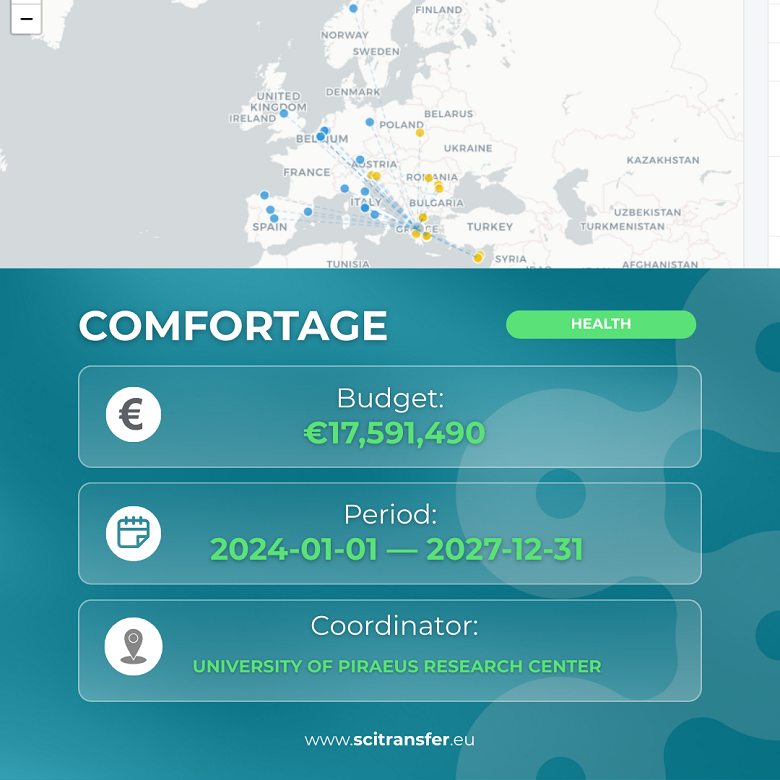
The COMFORTAGE project, supported by the Horizon Europe programme, aims to address this challenge. With nearly €17.6 million in EU funding, the initiative is developing a new generation of AI-powered tools designed to predict, monitor, and manage age-related conditions before they become severe. By bringing together experts in medicine, artificial intelligence, robotics and social sciences, the project explores how digital technologies can support healthier and more independent ageing across Europe.
A European Collaboration to Rethink Healthy Ageing
At the heart of COMFORTAGE lies a simple idea: better health decisions require better information about how ageing unfolds in real life.
Age-related diseases are complex. Dementia and frailty are influenced not only by biological factors but also by lifestyle, environment, physical activity and social interaction. Traditional healthcare systems often treat these factors separately, making early detection and prevention more difficult.
COMFORTAGE aims to build a pan-European framework for community-based, integrated and people-centred prevention and monitoring of age-related conditions. Rather than focusing only on treatment after diagnosis, the project seeks to identify risk factors earlier and provide personalised guidance for prevention and care.
The consortium brings together a wide range of expertise. Medical teams—including neurologists, psychiatrists, neuropsychologists and clinicians from memory clinics—collaborate with artificial intelligence specialists, data scientists, robotics engineers and social scientists. In addition, Digital Innovation Hubs across Europe provide advanced infrastructure, including smart homes, robotics platforms and living laboratories where emerging technologies can be tested in realistic environments.
This interdisciplinary collaboration reflects a growing recognition that ageing is not only a medical challenge but also a social, technological and societal one.

From Fragmented Health Data to Holistic Health Records
One of the major technological challenges in modern healthcare is the fragmentation of health data. Health information is often scattered across multiple systems, including hospital records, wearable devices, research databases and long-term observational studies.
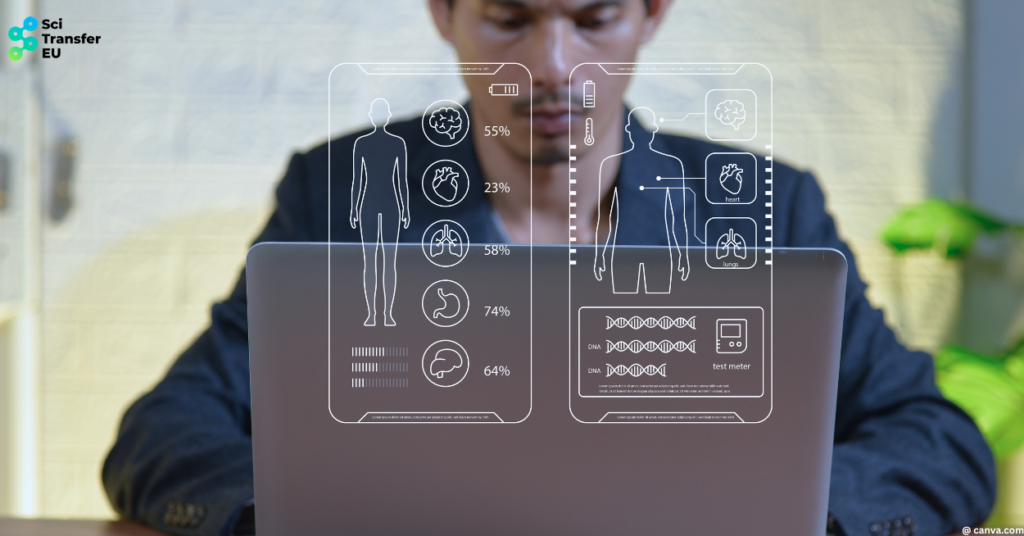
COMFORTAGE aims to bring these pieces together. The project is developing a system that integrates diverse data sources—including electronic medical records, biobanks, clinical cohorts, wearable sensors and real-world behavioural data—into a unified structure known as Holistic Health Records (HHRs).
Such integrated records would allow researchers and clinicians to identify patterns that are otherwise difficult to detect. Subtle changes in sleep patterns, mobility, cognition or physiological signals could reveal early indicators of risk. By combining clinical data with information about lifestyle and environment, the system aims to create a much more complete picture of how health evolves with age.
In practical terms, this means that prevention may no longer rely solely on occasional medical check-ups. Instead, health monitoring could become a continuous process supported by digital tools and intelligent data analysis.
Explainable AI for Personalized Ageing Care
Artificial intelligence lies at the core of the COMFORTAGE approach. However, the project places strong emphasis on explainable and trustworthy AI, rather than opaque algorithms.
In healthcare, clinicians must be able to understand how a system reaches its conclusions. For this reason, COMFORTAGE explores explainable machine learning techniques that reveal the reasoning behind predictions and recommendations.
Technologies under development include:
- AI-based medical devices for risk prediction
- Digital modelling approaches, sometimes referred to as patient digital twins
- Virtual assistive technologies that support monitoring and daily living
- Serious games designed to track cognitive performance and behavioural changes over time
The objective is not to replace healthcare professionals, but to support them with deeper insights and earlier signals of risk. By combining clinical expertise with AI-driven analysis, COMFORTAGE aims to enable more personalised prevention strategies and better-informed clinical decisions.
Testing Innovation in Real-Life Environments
A distinctive feature of COMFORTAGE is its focus on the environments where people actually live. Older adults spend most of their time at home and in their communities rather than in hospitals. Effective prevention therefore requires technologies that can function reliably in everyday settings.
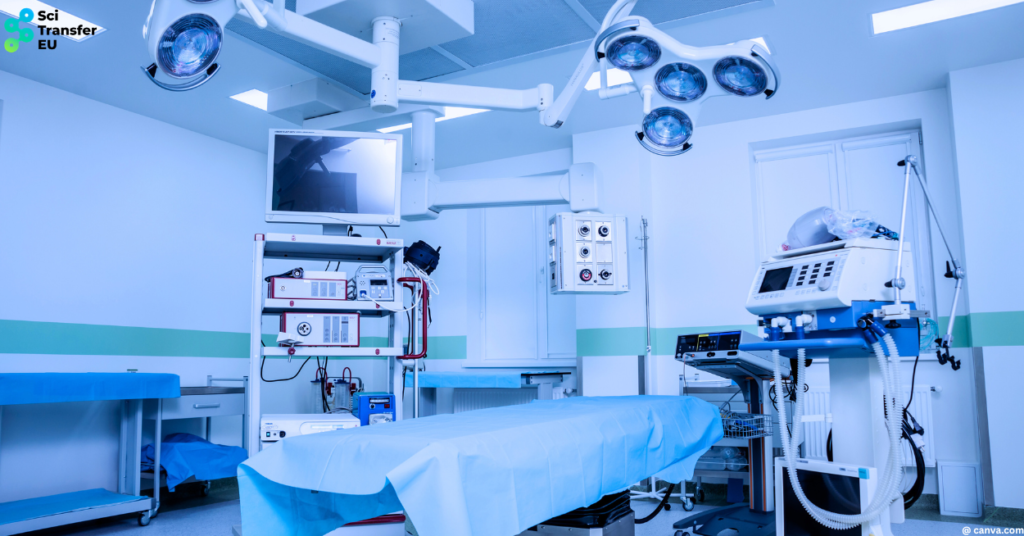
Digital Innovation Hubs and living laboratories within the project provide spaces where researchers can test new solutions under realistic conditions. These environments may include smart-home technologies, wearable monitoring devices and assistive robotics capable of tracking activity, wellbeing and daily routines.
At the same time, the project also explores social and community-based innovation. Ageing is influenced not only by biological factors but also by social networks, community engagement and access to support services. By combining technological tools with social approaches, COMFORTAGE seeks to improve both health outcomes and social participation for older adults.
Why Early Detection of Dementia and Frailty Matters
The importance of early detection cannot be overstated. Dementia and frailty often develop slowly, and interventions during the early stages can significantly delay decline.
Yet healthcare systems frequently respond only once symptoms have become severe. By integrating data from multiple sources and analysing it using advanced algorithms, COMFORTAGE aims to create systems capable of detecting subtle signals long before traditional diagnosis occurs.
Such capabilities have the potential to transform care delivery. Earlier detection means that clinicians and families can act sooner—adapting lifestyles, therapies or monitoring strategies before conditions worsen.
For patients and their families, this could translate into longer independence and improved quality of life. For healthcare systems, it could help reduce hospitalisations and improve the efficiency of care delivery.

Rethinking the Future of Healthy Ageing in Europe
Ultimately, the ambition of COMFORTAGE goes beyond the development of new technologies. The project represents a broader shift in how Europe approaches ageing and healthcare.
For decades, health systems have largely responded to dementia and frailty after symptoms appear. COMFORTAGE proposes a different model—one based on continuous monitoring, early prediction and personalised prevention.
If successful, this approach could move healthcare away from reactive crisis management and toward proactive, data-informed support. Clinicians and families would gain better tools for navigating the uncertainties of ageing, while older adults could maintain autonomy for longer.
In a continent where longevity continues to increase, such innovations could play a crucial role in ensuring that longer lives are also healthier, more independent and more fulfilling.
Autor: Radoslav Todorov
Images: canva.com, scitransfer.eu
Sources