

In medicine, time is often the most critical factor. When a patient suffers a stroke, heart attack, or traumatic injury, the difference between recovery and severe complications can be measured in minutes. Yet even in highly developed healthcare systems such as those across Europe, medical care can become fragmented when emergencies cross institutional or national boundaries.
Patient information may be stored in incompatible digital systems, recorded in different languages, or simply inaccessible to the clinicians who urgently need it. In critical situations, this lack of interoperability can delay decisions and complicate treatment.
The ESCORT project – AI Enabled Healthcare Services during Cross-Border Medical Emergencies and Regular Patient Services – seeks to address precisely this challenge. Funded under the Horizon Europe programme, the project explores how artificial intelligence, wearable devices, and connected medical technologies can help healthcare professionals access reliable patient information and make faster, safer clinical decisions.
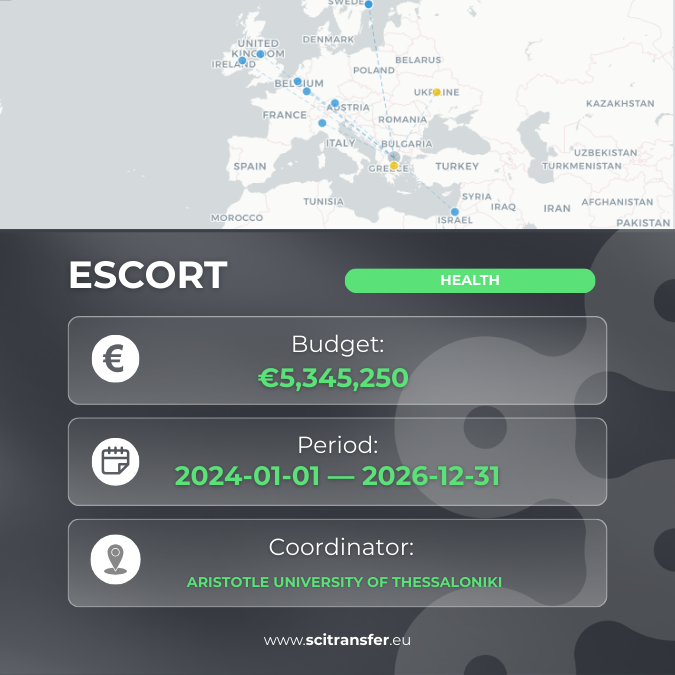
With an EU contribution of €5,345,250, ESCORT runs from January 2024 to December 2026. The project is coordinated by the Aristotle University of Thessaloniki (Greece) and brings together a multinational consortium of hospitals, universities, research institutions, and technology companies from across Europe and associated countries. Its goal is not only to develop new technological solutions, but also to contribute to a more resilient and interoperable European healthcare ecosystem capable of responding effectively when care must move across borders.
The Challenge of Cross-Border Healthcare
Europe’s healthcare landscape is both highly advanced and complex. Every year, millions of people travel, work, or live outside their country of residence. When medical emergencies occur far from a patient’s regular healthcare provider, access to accurate clinical information becomes essential for safe and effective treatment.
Although digital health records should theoretically allow clinicians to retrieve patient information instantly, several barriers still exist in practice. Health data are often stored in national or institutional systems that do not communicate easily with one another. Medical histories, medication records, or data generated by wearable devices may be scattered across different platforms. As a result, clinicians may need to rely on incomplete information or patient recollection—both of which can be unreliable in emergency situations.
At the same time, healthcare is becoming increasingly data-driven. Wearable sensors, mobile health applications, and remote monitoring devices are generating growing volumes of health data, from heart rate and activity levels to indicators of chronic disease. These technologies have significant potential to improve patient care, but only if the data they produce can be integrated into clinical workflows in a meaningful and accessible way.
ESCORT addresses this challenge by combining advanced digital technologies with real healthcare environments. The project seeks to ensure that relevant patient information can be accessed quickly and reliably by healthcare professionals, particularly in situations where time is critical.

A Digital Ecosystem for Emergency and Routine Care
The ESCORT project integrates several rapidly evolving technological fields, including artificial intelligence, machine learning, Internet of Things medical devices, and wearable health technologies. Together, these technologies form the foundation of a digital ecosystem designed to support both emergency interventions and routine healthcare services.
The objective is not simply to collect more health data, but to transform data into actionable clinical insights. By integrating medical records with real-time physiological data from wearable devices and applying machine-learning models to analyse this information, the system aims to provide clinicians with a clearer and more comprehensive picture of a patient’s health status.
Such insights could support faster and more informed clinical decisions, particularly in complex or time-sensitive situations. At the same time, the project follows an “ethics-by-design” approach, ensuring that technological innovation respects patient privacy, data protection regulations, and ethical standards. Evidence gathered through pilot studies will also contribute to policy discussions on how digital health technologies can be implemented responsibly within European healthcare systems.
From Emergency Response to Long-Term Monitoring
To ensure that its technological solutions respond to real clinical needs, ESCORT focuses on several key stages of patient care, ranging from the first moments of emergency response to post-hospital monitoring.
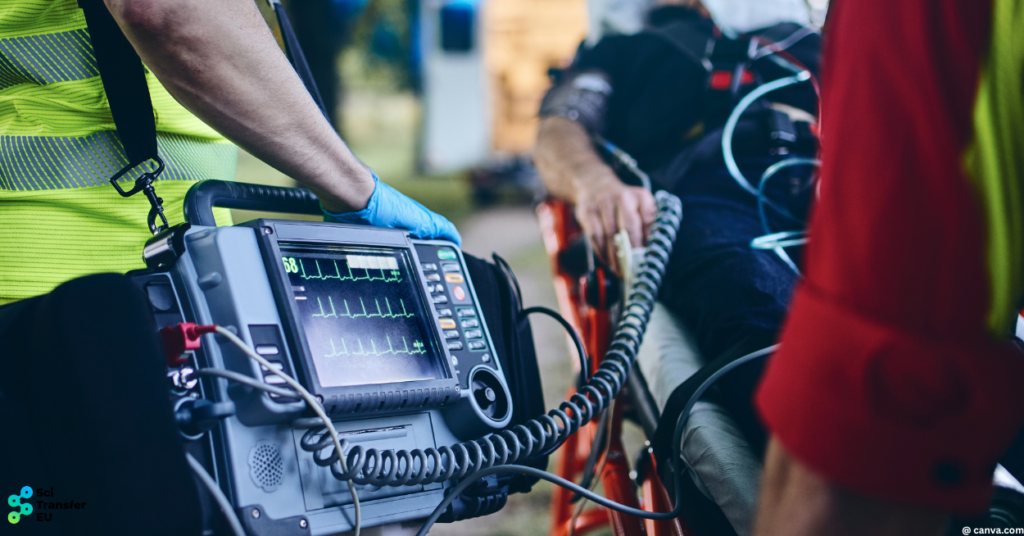
During the pre-hospital phase, emergency responders such as paramedics and ambulance teams often have limited information about the patients they are treating. ESCORT explores how wearable sensors and connected medical devices could transmit vital signs and other relevant data directly to emergency teams and hospital staff. Artificial intelligence tools could analyse this information in real time, helping clinicians anticipate complications and prepare treatment before the patient arrives at the hospital.
Once patients are admitted, clinicians must rapidly interpret complex medical information, including diagnostic results, treatment histories, medication interactions, and ongoing monitoring data. ESCORT investigates how AI-supported decision tools could assist physicians in analysing this information more efficiently, enabling them to make faster and better-informed treatment decisions.
The project also examines how digital health technologies can support patients after discharge from hospital. Wearable monitoring systems and digital platforms may help clinicians track recovery, detect early warning signs of deterioration, and maintain communication with patients during rehabilitation. Such continuity of care becomes particularly important when patients travel or move between countries.
Implications for Patients and Healthcare Systems
For patients, the potential impact of ESCORT lies primarily in improved continuity of care, especially in cross-border situations. A traveller who experiences a medical emergency in another European country may arrive at a hospital where clinicians have no immediate access to their medical history, allergies, or chronic conditions. Delays in obtaining this information can complicate diagnosis and treatment.
A system such as the one envisioned by ESCORT could enable clinicians to access reliable patient information almost instantly, while wearable devices provide real-time physiological data. Together, these tools could support faster triage, reduce the risk of medication errors, and improve coordination between emergency services and hospitals.
At the level of healthcare systems, the project addresses two important strategic priorities: interoperability and resilience. Modern healthcare increasingly depends on the ability of different systems and institutions to exchange data efficiently. When such communication is limited, critical information may remain trapped within institutional boundaries.
By demonstrating how digital health technologies can operate across different healthcare infrastructures and national systems, ESCORT aims to provide valuable insights into how interoperable services could be implemented across Europe.
Looking Ahead
Artificial intelligence, wearable sensors, and connected medical devices are often discussed as future possibilities for healthcare. ESCORT focuses instead on their practical application within real clinical environments. By addressing concrete scenarios—from ambulance response to post-discharge monitoring—the project aims to bring digital health innovation closer to everyday medical practice.
If successful, ESCORT will not only deliver new technological solutions but also contribute to the development of a more connected and resilient European healthcare system, capable of providing safe and effective care even when medical emergencies cross borders.
Autor: Radoslav Todorov
Images: canva.com, scitransfer.eu, escortproject.eu
Official project sources used for the article: