Rado T.

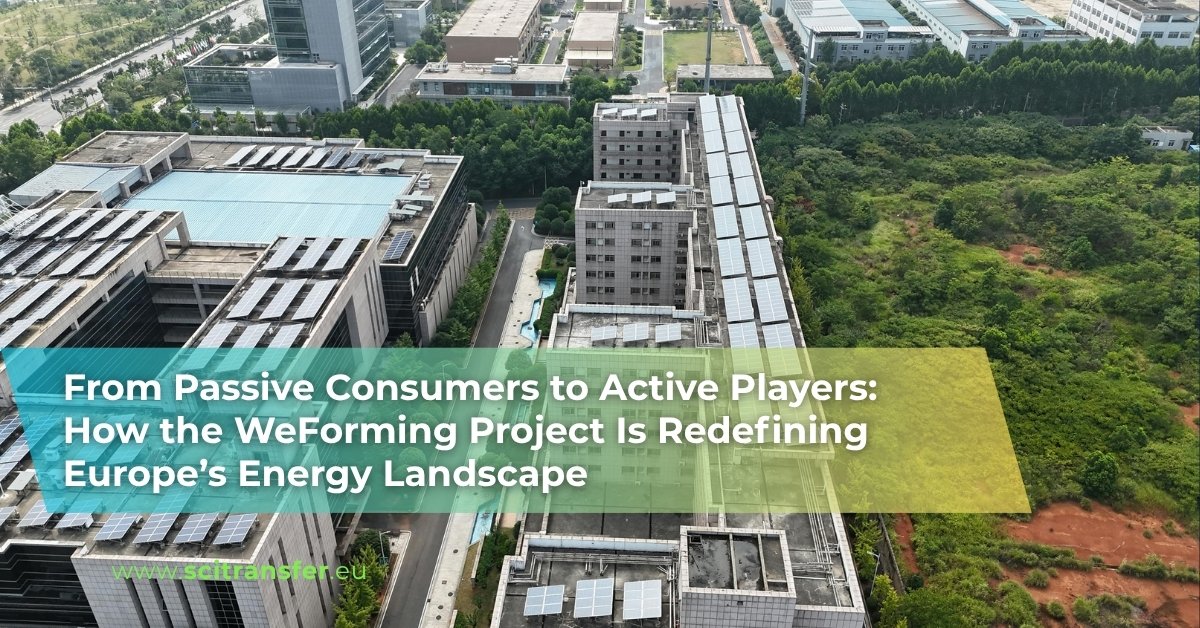
From Passive Consumers to Active Players: How the WeForming Project Is Redefining Europe’s Energy Landscape

Across Europe, buildings account for a substantial share of energy consumption. Traditionally, they have operated as passive endpoints within a complex energy system. The Horizon Europe–funded project WeForming challenges this paradigm by transforming buildings into intelligent, responsive actors capable of shaping energy flows, supporting grid stability, and accelerating the transition to clean energy. With a […]

From Passive Consumers to Active Players: How the WeForming Project Is Redefining Europe’s Energy Landscape Read More »

Reimagining European Democracy: How the YOUROPE Project Empowers a New Generation

At a time when European democracy faces mounting pressure—from political extremism to declining civic participation—the YOUROPE project offers a timely and ambitious response. Officially titled “Visionary roadmaps: Crafting an Inclusive and Participatory European Democracy with Youth and Communities”, this Horizon Europe-funded initiative seeks to reconnect young people with democratic processes and ensure their voices help

Reimagining European Democracy: How the YOUROPE Project Empowers a New Generation Read More »

ESMH Summer School 2026: A Unique Opportunity for Young Science Journalists in the Age of AI

The European Science-Media Hub (ESMH), an initiative of the European Parliament, has officially opened applications for its 2026 Summer School – a four-day intensive programme dedicated to science communication in the era of Artificial Intelligence. Taking place from 22 to 25 June 2026 in Brussels, the Summer School will bring together up to 50 young

ESMH Summer School 2026: A Unique Opportunity for Young Science Journalists in the Age of AI Read More »

ZEAS: Steering Europe’s Maritime Future Towards Zero Emissions

In the effort to meet Europe’s climate targets, the maritime sector remains one of the most complex areas to decarbonise. Ships are essential to trade and mobility, yet they are also a significant source of greenhouse gas emissions. Within this context, the ZEAS project (Zero Emission Adriatic Ship) provides a concrete example of how scientific

ZEAS: Steering Europe’s Maritime Future Towards Zero Emissions Read More »

Bridging Europe’s Research Divide: How the A4L_BRIDGE Project Is Strengthening Science in Central and Eastern Europe

Europe is one of the world’s leading scientific regions. Yet behind its strong research performance lies a persistent imbalance. While many Western European institutions dominate global rankings, numerous research centres in Central and Eastern Europe continue to face more challenging structural conditions. The gap is not simply about funding. It reflects deeper differences in governance,

Bridging Europe’s Research Divide: How the A4L_BRIDGE Project Is Strengthening Science in Central and Eastern Europe Read More »

COMFORTAGE: Can Artificial Intelligence Help Europe Age Healthier?

Europe is ageing. Over the coming decades, millions more Europeans will live into their seventies, eighties and beyond. Longer lives represent one of the greatest achievements of modern medicine, but they also raise an urgent question: how can health systems help older adults remain independent, active and mentally healthy for as long as possible? Two

COMFORTAGE: Can Artificial Intelligence Help Europe Age Healthier? Read More »

Digital Twins for Health: How the EU-Funded DTRIP4H Project Is Rethinking Preventive Medicine

Across Europe, healthcare systems face a striking paradox. Biomedical research generates unprecedented volumes of data, yet much of this knowledge remains difficult to translate into routine clinical practice. Research infrastructures collect valuable information on diseases, treatments and environmental exposures, but legal constraints, technical barriers and differences between national systems often prevent these resources from being

Digital Twins for Health: How the EU-Funded DTRIP4H Project Is Rethinking Preventive Medicine Read More »

When Emergencies Cross Borders: How the ESCORT Project Is Rethinking Digital Healthcare in Europe

In medicine, time is often the most critical factor. When a patient suffers a stroke, heart attack, or traumatic injury, the difference between recovery and severe complications can be measured in minutes. Yet even in highly developed healthcare systems such as those across Europe, medical care can become fragmented when emergencies cross institutional or national

When Emergencies Cross Borders: How the ESCORT Project Is Rethinking Digital Healthcare in Europe Read More »

FORGENOM II: Building Genomic Capacity for the Future of European Medicine

In recent years, genomics and proteomics have moved far beyond specialised laboratory disciplines. They have become essential components of modern medical infrastructure—from the precise diagnosis of rare diseases to targeted cancer therapies and the management of public health crises. Yet access to these capabilities is not evenly distributed across Europe. Differences in infrastructure, expertise and

FORGENOM II: Building Genomic Capacity for the Future of European Medicine Read More »

MPA Europe: A Strategic Blueprint for Europe’s Future Marine Protected Areas

Across the Atlantic, the Mediterranean, the Baltic and the Black Sea, Europe is confronted with a complex environmental challenge: how to protect marine biodiversity at a scale that reflects ecosystem connectivity, cross-border dynamics and the accelerating impacts of climate change. The Horizon Europe project MPA Europe addresses this challenge through integrated, data-driven analysis and strategic

MPA Europe: A Strategic Blueprint for Europe’s Future Marine Protected Areas Read More »